Who Listens?

Two psychiatrists met at their 20th college reunion. One was vibrant and enthusiastic. He looked younger than his years. The other appeared withered and fatigued and walked with the stoop of the aged. “So, what’s your secret?” the tired-looking psychiatrist asked. “Listening to other people’s problems every day, all day long, for years on end, has made an old man of me.”

The younger-looking one replied, “Who listens?”

Unfortunately, that is too often a problem with the rest of us, isn’t it? Who listens? I mean, REALLY listens?

A woman who lives in New York writes:  that her 22-year-old electrician son Joe went to Manhattan a few days after the September 11, 2001 attacks on the World Trade Center buildings. He wanted to volunteer his time but discovered that his skills were not needed.

But it turns out that Joe was able to help in a way he never anticipated. For on the train ride home, he sat across from a weary firefighter who was also traveling home from the scene of the disaster. The firefighter was covered in what appeared to be “ground zero” dirt and debris. Though Joe could see bits of rock in the man’s hair and noticed that his hands were bloody, but what worried the young man most was the look in the firefighter’s eyes. They appeared lifeless and dull.

Then the man, apparently in shock, began to talk and Joe listened. Joe soon forgot his own disappointment about not being able to volunteer his skills that day as he listened to the gruesome story the firefighter related.

The man told about retrieving a shoe with a foot inside. Joe listened. He talked about cleaning debris from a face, then discovering that this person’s body was gone. Joe continued to listen without flinching. He did not react in disgust. He did not judge. He did not interrupt. He just listened.

He listened as the firefighter lamented about the carnage everywhere and about shoes…there were so many shoes, he said. Everywhere…shoes.

Through it all Joe quietly held the man’s attention and listened, which is exactly what the rescue worker needed at that moment. And because he listened, the man continued to speak. He talked his pain out, as much as possible. In the presence of a stranger, he tried to put his world back in order, to make sense of the day’s chaos. And Joe, for that time at least, helped him carry his unbelievably heavy burden.

That day Joe did not give blood, nor did he use his electrical skills to help with the relief effort. But he did one of the most important things a human can do for another. He gave a stunned and disheartened man his whole attention, and thereby, in a small but vital way, assisted in the work of setting the world right.

Mary Lou Casey says, “What people really need is a good listening-to.” It’s not always easy. And, at times, it may not be fun. In fact, listening closely to another often turns out to be difficult work. But day in and day out, attentive listening may be one of the most important and satisfying ways we can spend our time.

It’s true. What people really need is a good listening-to.

And so, we pray: Father, I try to listen, but I am afraid I fail to often. I am tankful for the times I really listen – not for me, but in helping the person who values me enough to come and talk. Give me the heart to really listen, because I really need a good listening-to. Amen.

Grace and Peace
Steve

To Judge or Love

“Whenever I dwell for any length of time on my own shortcomings,” says writer Margaret Halsey, “they gradually begin to seem mild, harmless, rather engaging little things, not at all like the staring defects in other people’s characters.” That’s funny, and more true than I care to admit. It must have been so with members of the US Congress in the early 20th Century. Many of them seemed less concerned with their own piddling shortcomings and preferred to wail about a staring defect in the senator from the state of Utah, Reed Smoot. So outraged were they, Smoot almost was not seated in the senate.

Reed Smoot was a leader in the Mormon (LDS) Church and, back in those days, his church was accused of secretly allowing the practice of plural marriages (polygamy). Although Smoot had only one wife, some of the more sanctimonious members of the senate argued that he should not be seated, given the beliefs of his church.

But the issue was settled when Senator Boies Penrose of Pennsylvania strode to the podium and looked directly at some of his colleagues who, though married, were known to “womanize.” He stated emphatically, “As for me, I would prefer to have seated beside me in the Senate a polygamist who doesn’t polyg than a monogamist who doesn’t monog.” End of matter.

I understand there are times we have to be discerning. But I don’t want to be known as a judging person. There is good and bad in all of us and I have plenty to work on in my own life. 

Besides, I think Mother Teresa got it right when she said: “If you judge people, you have no time to love them.  And, it should be added, if you love people, you have no desire to judge them. Substitute the word “love” with the words “understand” or “know,” and it works just as well. If you understand people, if you know them, truly know them, you have no desire to judge them.

Losing the desire to judge – now that can change a life.

And So, we pray: Father, I am afraid that I am to quick to judge before I am tempted to love. I have so much self-work to do that I could stay very busy at that for a thousand years and still not be where I need to be. I, myself, have so much to be judged on – I am so blessed to know that You, O Lord, have chosen to love me instead. Help me do the same with all my brothers and sisters. Amen

Grace and Peace
Steve

Do We Really Want to Listen?

The story is told of Franklin Roosevelt, who often endured long receiving lines at the White House. He complained that no one really paid any attention to what was said. 

One day, during a reception, he decided to try an experiment. To each person who came down the line and shook his hand, he murmured, “I murdered my grandmother this morning.” The guests responded with phrases like, “Marvelous!” Or, “Keep up the good work.” Or, “We are proud of you. God bless you, sir.”

It was not until the end of the line, while greeting the ambassador from Bolivia, that his words were actually heard. Not quite knowing what to say, the ambassador leaned over and whispered, “I’m sure she had it coming.”

There are several reasons that no true listening can ever take place in a fast-paced receiving line. Music, noise and the activity of other people can be distracting. What’s more, the purpose of the line is more for a quick greeting rather than concerned listening. And one more thing…folks are more intent on getting out what they want to say to the president than listening to what might be said to them. But I wonder…did they WANT to hear what he had to say?

All my life I’ve carried a mental picture of my grandfather Melvin the way I saw him so many times – stooped over, head bowed low, intently listening to whomever he was chatting with. He was a tall man and a bit hard of hearing. The reason for his unusual posture was no doubt to get his ear closer to the speaker’s mouth,(especially a six-year-old on the way to fishing in the pond across from their home) but it gave the illusion that, for a few minutes at least, he wanted nothing more than to listen carefully to every word the other had to say. 

Henry David Thoreau wrote, “The greatest compliment that was ever paid me was when one asked me what I thought and attended to my answer.” The way my grandfather listened was as if he were paying the speaker a supreme compliment. His body language said, “Here, let me get a little closer and listen. I truly want to hear what you have to say.”

The key to good listening isn’t technique, it’s desire. Eye contact is helpful. So is asking pertinent questions, paraphrasing to be sure you understand, refraining from interrupting or changing the subject – all of these techniques are helpful. But the best way to ensure that you will listen well isn’t in HOW you listen, it’s mostly in simply wanting to understand.

I believe that is the crucial question: do we WANT to understand? Until we truly want to understand the other person, we’ll never listen well. 

And so, we pray: Father, Help me to really want to listen to all who want to speak to me, especially help me to really listen – enough to understand and care. Amen.

Grace and Peace
Steve

Knowing How They Feel

It was the late 1940s. Eastern Airline’s chair, Captain Eddie Rickenbacker, had a problem. Customers were complaining because the airline was mishandling luggage far too often. When nothing else seemed to work, he decided to take drastic action. 

Rickenbacker called a special meeting of the management personnel in Miami. Eastern’s management flew to Miami and was told their baggage would be delivered to their hotel rooms. It wasn’t. Instead, Rickenbacker had the luggage stored overnight.

It was a hot and humid summer and the muggy hotel had no air-conditioning. Various corporate managers showed up to the meeting the next morning unshaven, teeth unbrushed and wearing dirty and wrinkled clothes.

There was no sign of the baggage all that day. But it was delivered that night, at 3:00 a.m., with a loud pounding on hotel room doors.

Rickenbacker opened the next morning’s session by saying, “Now you know how the customer feels when you mishandle his luggage.” He knew his team would be ineffective until his people learned to empathize with their customers. 

Psychiatrist Karl Menninger put it like this: “It is hard for a free fish to understand what is happening to a hooked one.” That is why Rickenbacker wanted his employees, starting with his management team, to experience what it is like to be hooked.

When we understand another’s problem, we will be more effective in business and personal relationships. And if we’re ever hooked ourselves and someone who “gets it” reaches out to help, something wonderful is likely to happen.

And so, we pray: Father, many times it seems like we just skip through life not really seeing or caring how other people feel – what they are going through. Help us to see their real need – have empathy for where they are and what they feel – really feel. Only then can we change our skippy attitude to one that kneels down to lift up the hand of someone in need. Amen.

Grace and Peace
Steve

Building Bridges of Understanding

I recently learned of a research organization that asked several thousand people, “What are the most serious faults of executives in dealing with their associates and subordinates?” (By the way, this also applies to teachers dealing with their students and parents with their children.) Several faults could be chosen. What do you think was mentioned most often? 

Sixty eight percent of the respondents said the biggest problem they see in the workplace is a consistent failure to see the other person’s point of view. In fact, that was mentioned twice as often as anything else.

Apparently, the people they value most in the workplace are those who try to understand others. And we know that is true in all kinds of relationships. We don’t always need others to agree with us, but we do need to feel heard. We need them to at least understand what we are saying. In fact, feeling heard may well be one of our greatest emotional needs. Without it, we can feel disheartened, we believe we don’t matter, and we find ourselves increasingly unhappy and lonely.

Grade school children demonstrate this important human need to be heard. In some schools, children seldom talk about personal problems with their teachers or the school principal for fear of consequences. But do you know which adult in the school they sometimes feel safest talking to? The school custodian. Often, the custodian is a person who will listen without judging; an adult who won’t discount what was said.

And something amazing can happen when we decide to try to hear another’s point of view, we make allies out of enemies and friends out of strangers. It’s a way of building strong emotional bridges between people. Not just any bridges, either – bridges to the heart.

And so, we pray: Father, I have always thought one of my gifts was that I was a good listener. I wonder if that is really true. Help me to truly listen to anyone seeking my ear. And not just to understand, but engage them enough to help them in their trials. Amen.

Grace and Peace
Steve

Dreaming About Next Year

The agricultural school dean was interviewing a freshman. “Why have you chosen this career?” he asked.

“I dream of making a million dollars in farming, like my father,” replied the freshman.

The dean was impressed. “Your father made a million dollars in farming?”

“No,” the student said. “But he always dreamed of it.”

All right. That was corny. But at least this student has a dream, even if it is only a dream about money. 

I especially like the story of a man who was discussing with his wife a trip he wanted to take to Alaska. He told her he’d always dreamed of such an adventure. He wanted to travel deep into the wilderness. He wanted to rough it. He talked about how exciting it would be to stay in a log cabin without electricity, to hunt caribou and drive a dog team instead of a car.

“If we decided to live there permanently, away from civilization, what would you miss the most?” he asked his wife.

She replied, “You.”

His dream — not hers. A better dream might include her. 

This is a time of year we often examine our dreams and goals. I’ve found a couple of important questions helpful when I consider which dreams to chase and which to leave alone.

First, does my dream have deep meaning? Or put another way, is it significant and important enough to commit my time and energy toward? What will it ultimately mean if I accomplish this thing I think I want? 

The second question is similar. Does my dream spring from the best that is within me? Does it come from a place of love or altruism? Will my life and the lives of those I love be better for it? My best dreams include those I love.

Does my dream have deep meaning and does it spring from the best that is within me? Take the time you need to answer these questions well and you’ll find yourself pursuing something that is truly significant. When that happens, everything can change.  

Now, as you look ahead…what are you dreaming about? 

And so, we pray: Lord, I do have dreams even at my age. They are not about living in Alaska in a powerless log cabin. It might be about living in a cottage in Hawaii. But the dreams I really need to dream about are the one you have for me and my family… ones that involve and uplift others… one that shines your light to all around. Amen.

Grace and Peace
Steve

A New Life

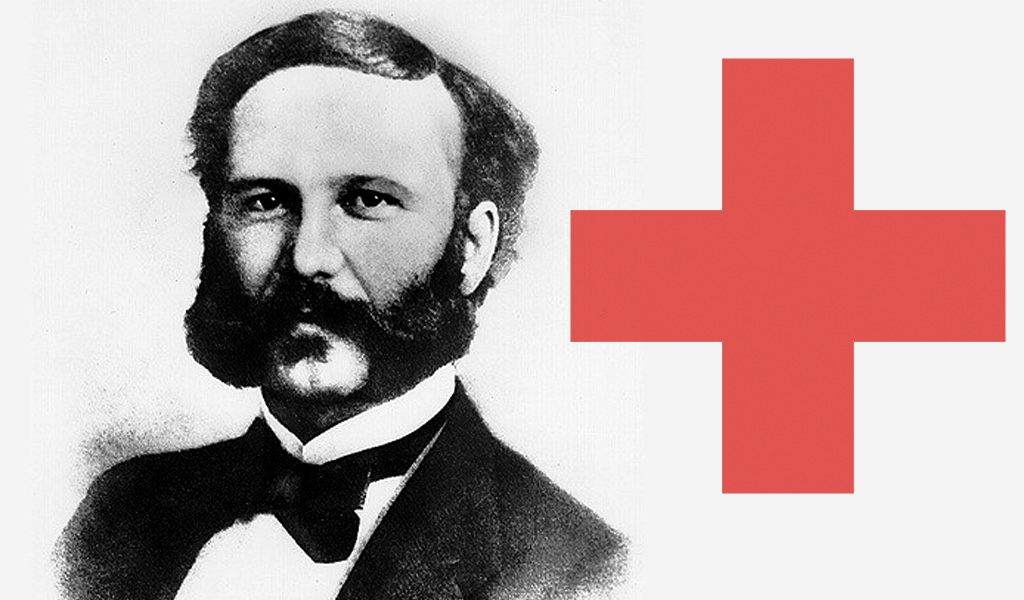
The date is June 24, 1859. Suddenly, there he is, atop a hill overlooking the plain of Solferino. The troops of Napoleon III (Louis Napoleon) prepare for battle with the Austrians below, and Henri Dunant has a box-seat view from his place on the hill.

Trumpets blare, muskets crack and cannons boom. The two armies crash into each other, as Henri looks on, transfixed. He sees the dust rising. He hears the screams of the injured. He watches bleeding, maimed men take their last breaths as he stares in horror at the scene below.

Henri doesn’t mean to be there. He is only on a business trip – to speak to Louis Napoleon about a financial transaction between the Swiss and the French. But he arrived late and now finds himself in a position to witness first-hand the atrocities of war.

What Henri sees from his hill, however, pales in comparison with what he is soon to witness. Entering a small town shortly after the fierce encounter, Henri now observes the battle’s refugees. Every building is filled with the mangled, the injured, the dead. Henri, aching with pity, decides to stay in the village three more days to comfort the young soldiers.

He realizes that his life will never be the same again. Driven by a powerful passion to abolish war, Henri Dunant will eventually lose his successful banking career and all his worldly possessions only to die as a virtual unknown in an obscure poorhouse.

But we remember Henri today because the Swiss humanitarian and activist was the first recipient of the Nobel Peace Prize (in 1901). We also remember him because he took his country’s flag, a white cross on a red background, reversed the colors and founded what was to become a worldwide movement – the Red Cross.

Act One of Henri Dunant’s life closed June 24, 1859. Act Two opened immediately and played the remainder of his 81 years.

Many people’s lives can be divided into Act One and Act Two. The first performance ends when one decides to ultimately follow a new direction or passion. Henri’s old life, driven by financial success, prestige and power, no longer satisfied. A new Henri Dunant emerged in Act Two; one who was motivated by love, compassion and an overriding commitment to abolish the horrors of war.

For many people like Henri, Act Two begins with a defining moment – it may be an experience, an important insight or perhaps even a rite of passage, such as a birthday. However it comes about, Act Two begins when the “old self” is laid to rest and a new self is born. At its best, this new self is one governed by different priorities and a renewed passion to live differently. 

Act One might be closing in your life. If so, are you ready for Act Two? Something exciting may be about to begin.

And so, we pray: Lord, we thank you for allowing us… encouraging us to begin a new life… an act II, if you will, where we allow you to change us from an “I” to a “We”. Lead us into the journey of the second part of our lives… where we live for others. Amen.

Grace and Peace
Steve

Live Out Your Love

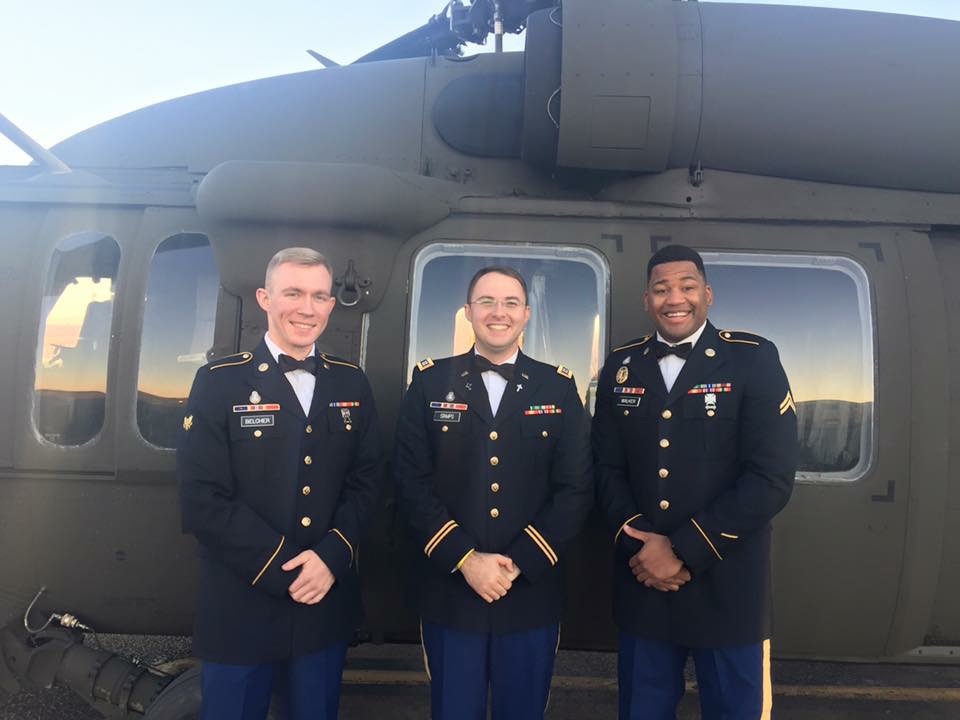
Captain Chaplain Kevin Stamps
My great nephew

Imagine four Army chaplains during an icy storm at sea; four men in uniform holding hands as they gaze over the rail of their sinking vessel. They are watching lifeboats pulling away from their reeling ship, the U.S. transport Dorchester. The story of these chaplains is a remarkable account of love and sacrifice. 
    
The scene takes place February 3, 1943, off the southern tip of Greenland. The winter night covers the ship like a blanket. Most of the 909 aboard ship are asleep below the decks. 

Suddenly the Dorchester jerks and shudders. A German torpedo has smashed through her starboard side! In a raging torrent, the sea spurts through the gaping wound. The Dorchester has been dealt a mortal blow. She is sinking. 

An order is given to abandon ship. Aboard the dying vessel, men – many of them injured – search frantically for life jackets. Some stand in shock, not knowing how to react to the catastrophe.

Amidst the chaos stand four pillars of strength, four Army chaplains: George L. Fox, Methodist; Alexander Goode, Jewish; Clark V. Poling, Reformed; and John P. Washington, Roman Catholic. They calm the panic-stricken, help the confused search for life jackets and aid the soldiers into the lifeboats swinging out from the tilting deck.  

When no more jackets can be found, each chaplain takes off his own and straps it onto a soldier who has none. The lifeboats pull slowly away from the doomed vessel. Only 299 will finally survive this night. 

As the Dorchester slides beneath the icy water, some can see the four chaplains, hand in hand, praying to the God of them all. The chaplains’ different theological opinions did not seem to matter much on a sinking ship. All that mattered was that, at a time of crisis, they lived their love. Yet even for us, every day in lesser ways, I suspect that’s all that ever matters.

And so, we pray: Lord, I am not sure how I, a pastor, would have reacted or responded in such a situation. I pray that I would have your Spirit so alive in me that I would respond as these chaplains did… living out their love for you and all your children above themselves. Put your seal upon my life and live in me. Amen.

Grace and Peace
Steve

Greatness Lives Among Us

Greatness is too often defined by an unusual act of courage or a life of extraordinary merit or virtue. But glimpses of greatness can be seen all around us, and especially in those who genuinely care for others.

Father Albert Braun was such a man. After his ordination, he requested to live amongst some of the poorest of the world’s poor. He was sent to the Mescalero Apache reservation in south central New Mexico. Father Braun learned to love the Apache. And as he lived with them, he learned from them and they learned from him. They became family.

He stayed many years on the reservation but left it twice to serve as a chaplain during both World Wars. He almost died in World War II when his Allied forces tried to defend the Philippine Islands from attack. Many of his comrades died during the fighting and Father Braun risked his own life to comfort the wounded and give the dying Last Rites. He was forced to march with no food and little water. Along the way, many more of the men died. And in the prisoner of war camps, more lives yet were lost to disease, cruel physical treatment and malnutrition.

Father Braun had learned much from the Apache about surviving off the land. When he went out on work detail, he found fruit and edible vegetables that he smuggled back into the camp to help supplement the men’s diets. Once he acquired the vaccine for diphtheria that he also secreted into camp, but it wasn’t enough. They drew lots to determine who would get the medicine. Though afflicted himself, he gave his portion to a young soldier. Before long, he suffered simultaneously from diphtheria, malaria, dysentery and beriberi.

He barely survived the war. Later, he asked to be returned to New Mexico to live once again with the Apache. When he knew that his own death was near, Father Braun requested to be buried on the reservation, surrounded by his Apache “family.”

Today, at the church of St. Joseph, one can see portraits of the Apache’s greatest chiefs and warriors. There is a portrait of Geronimo, one of Cochise, a picture of Victorio and a portrait of Father Albert Braun, who came to live among them as a true friend.

Father Braun showed a certain greatness, not by any one heroic deed, but by the sum total of a life of caring. I believe we can catch glimpses of greatness in the lives of anybody who genuinely cares.

And so, we pray: Lord, I believe you send those Father Braun’s across our paths to help us catch a glimpse of what it really means to live a life of love, sacrifice and greatness. Keep them coming, ’cause we are stubborn and not quick to hear, see or understand. Help us to be your people of courage who live out greatness, not for us, to uplift your people in every situation of need and want. Amen.

Grace and Peace
Steve

Ebenezer Scrooge

A Buddhist monk strode into a Zen pizza parlor and said, “Make me one with everything.” The proprietor appreciated the Zen humor and, when the monk paid with $20 bill, the guy pocketed it.  

“Hey,” asked the monk, “where’s my change?” 

“Change,” replied the owner inscrutably, “must come from within.”

And it’s true: we can wait for things to change or we can change ourselves. One way rarely works while the other rarely fails.

I have a friend who used to teach literature to high school students. He once told me how maligned the name of Ebenezer Scrooge has become. “Dickens never meant for Scrooge to be a villain,” he once said, speaking of Charles Dickens’ classic “Christmas Carol.” Yes, Scrooge was a miser and disliked by pretty much everybody. But my friend reminds me that the story doesn’t end there. It doesn’t end with Scrooge dying a miserable and lonely death. The point of the story is that Scrooge WAKES UP. After the restless night of ghost visitations, he wakes up and decides that things truly can be different. He can choose to be compassionate, generous and happy. He understands that he can behave toward others in a different way. He can look at things differently. His miserable past does not need to determine his future. His life story illustrates the words of George Elliot: “It is never too late to be what you might have been.” 

“To this day,” my friend says, “the name of Scrooge is synonymous with somebody stingy and selfish when it should be just the opposite. Scrooge woke up and made different decisions. He lived the rest of his life a model of generosity and joy and goodwill toward all. Nobody ever “kept Christmas,” Dickens tells us, like Ebenezer Scrooge.

I regularly remind myself that it is not too late to be what I might have been. And I’m learning that anything can happen…when I wake up and make different decisions.

And so, we pray: Lord, we all have our days when we are the before Ebenezer with family, friends, everyone. Help us become the after Ebenezer where love has its way… giving, compassion… where we are woke. Help us to know it is never too late too late to be what we might have been. Amen.

Grace and Peace
Steve