Love Cures All

Almost a century ago, two young medical school graduates, along with their doctor father, tried an important experiment. They built a small sanitarium on a farm outside Topeka, Kansas. This was a time when the “rest cure” was in vogue as a treatment for psychiatric disorders as well as for a few physical ailments. Oftentimes patients were sent to impersonal institutions where they might remain their entire lives.  

The doctors were Charles Menninger and his sons Karl and William. The Menningers had a different idea. Their sanitarium would not be impersonal. They were determined to create a loving, family atmosphere among their patients and staff. Their vision was to grow a community of doctors, nurses and support staff that would cooperate to heal patients; a place where a patient’s mental health would be as important as her physical health.

To this end, nurses were given special training and were told, “Let each person know how much you value them. Shower these people with love.” Rather than being sent to a place where they were warehoused for life, many of the patients received more love and kindness at the Menninger Sanitarium than they had ever experienced before. 

The treatment worked – spectacularly. The experiment was a resounding success and the Menninger’s revolutionary approach to healing and their radical (for that daytime) methods became world famous. 

Karl Menninger later wrote numerous books and became a leading figure in American psychiatry. “Love cures people,” Menninger wrote, “both the ones who give it and the ones who receive it.” His work demonstrated just how true that statement is.

Essayist Hamilton Wright Mabie said, “Blessed is the season which engages the whole world in a conspiracy of love.” I’m attracted to that phrase… conspiracy of love. For many people around the world, Christmas is such a season. This time of year is an annual celebration where folks agree to put aside destructive differences and toxic behavior and allow love to take center stage. When that happens, it can be a beautiful thing. And even more beautiful if the season can truly engage the whole world in such a conspiracy.

I would like to be part of the plot. And not only for a season. If enough of us join together, the movement will become an irresistible and unstoppable force for good.

Spiritual writer Emmett Fox put it like this:

There is no difficulty that enough love will not conquer. 
No disease that enough love will not heal.
No door that enough love will not open.
No gulf that enough love will not bridge.
No wall that enough love will not throw down.
No sin that enough love will not redeem.

What could happen if you let each person in your life know how much you value them? What might happen if you were to, as Menninger says, shower everyone with love? And not just friends and family, though they may need to hear it from you. But everyone? Especially those hardest to love?

Does it sound unrealistic? Maybe it is. But remember, love cures people. And it can cure a world.

The only real question is, will we join the conspiracy?

And so, we pray: Lord, help me to be all in your conspiracy of love… let me be a part of your healing love for me and for others. Amen.

Grace and Peace
Steve

The Strange Power of Love

Sometimes fact is more mysterious than fiction. I clipped a newspaper article several years ago which tells a story that is strange… and beautiful. 

Stan heard in church about a Denver, Colorado family facing a rather bleak Christmas holiday. Medical bills robbed them of any extras; they would not even have a tree. Stan’s pastor asked him if he would cut a Christmas tree for them.

So Stan and his son Jay headed up into the Colorado Rockies in the family pickup. However, the truck skidded off the icy road and hit a boulder that shattered the windshield. Jay was showered by glass slivers and suffered from shock and crash trauma. Stan was uninjured, though somewhat shaken.

Cars sped past that day — maybe 200 of them. Only two stopped to help. A gentle, dark-haired woman took the boy into her car to comfort him while her husband and another man helped Stan move his truck off the road. Then this kind couple drove father and son to Stan’s home and quietly left without identifying themselves.

Stan was discouraged that he was unable to cut a tree for the family that his church was trying to help. But later in the month, the pastor asked if Stan might deliver a food basket to the same unfortunate family. He found the house, but he could hardly find his speech when the door opened. For standing there before him was the same couple who had stopped to help him on the mountain road when so many others had passed him by.

There is a strange power in love. Some folks may call it an amazing coincidence. Others might say it was divine providence. But I choose to think that love has its own power, and that sometimes these kinds of mysteries are better left unanalyzed. Let them remain mysteries. And enjoy the wonder of it all. For whenever we choose to be kind, we just might be surprised by joy.

And so, we pray: Lord help us be the avenues of the strange power of your love where ever and whenever it is needed. Guide our hearts and our hands that we may accomplish the joy you will in us and those around us. Amen.

Grace and Peace
Steve

Peace On Earth

In the midst of a world at war, Eleanor Roosevelt captured the mood at Christmas 1942. “How completely the character of Christmas has changed this year,” she wrote in her newspaper column. “I could no more say to you a ‘Merry Christmas’ without feeling a catch in my throat than I could fly to the moon!”

In September 1945, U. S. Navy chief radioman Walter G. Germann wrote his son from a ship anchored in Tokyo Bay to tell him that the formal surrender of Japan would soon be signed. “When you get a little older you may think war to be a great adventure — take it from me, it’s the most horrible thing ever done…I’ll be home this Christmas…” Home. To a world at peace.

In 1955 a thirteen-year-old Japanese girl died of “the atom bomb disease” — radiation-induced leukemia. Sadako Sasaki was one of many who suffered the after-effects of those bombs dropped on Hiroshima and Nagasaki in 1945.

Japanese myth has it that cranes live for a thousand years, and anyone who folds 1000 paper cranes will have a wish granted. So during her illness, Sadako folded paper cranes, and with each crane she wished that she would recover from her illness. She managed 644 cranes before she left this life behind.

Sadako’s classmates folded the remaining 356 cranes so that she could be buried with a thousand paper cranes. Friends collected money from children all over Japan to erect a monument to Sadako in Hiroshima’s Peace Park. The inscription reads:

This is our cry. This is our prayer. Peace on earth.

Each year people place paper cranes at the base of the statue to recall the tragedy of war and to celebrate humanity’s undying hope for peace. In some places around the world, people fold paper cranes each holiday season to use as decorations and as a symbol of their deep desire for lasting peace.

I, too, have a deep desire for a day when war will become a relic of the past. I yearn for a day when we join hearts in union with one another, while beating swords into plowshares…and folding paper into cranes. 

Peace on earth. The generation to accomplish it will truly be the greatest generation ever.

And so, we pray: Lord, we are tired of war… people losing their lives for political reasons. I understand WWII had to be fought or the world would have gone completely evil… but all the others are so unnecessary and so wasteful of human life. Help us, O Lord, to work for peace among all your children… that there may truly be PEACE ON EARTH. Amen.

Grace and Peace
Steve

What Do We Do With Our Scars?

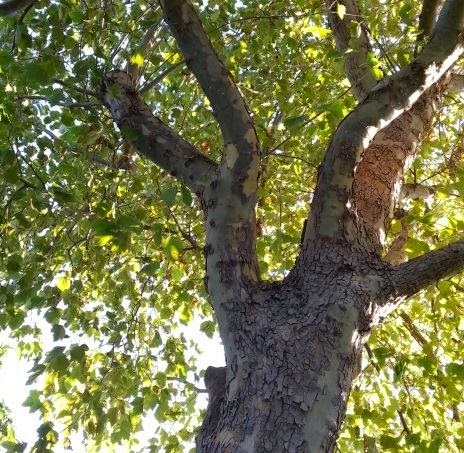
Po Bronson, in his book Why Do I Love These People? (Random House, 2005), tells a true story about a scarred and stately elm tree. The tree was planted in the first half of the 20th Century on a farm near Beulah, Michigan. It grew to be magnificent. Today the elm spans some 60 feet across its lush, green crown. Its trunk measures about 12 feet in circumference. And a vivid scar encircles the tree.

In the 1950s the family that owned the farm kept a bull chained to the elm. The bull paced round and round the tree. The heavy iron chain scraped a trench in the bark about three feet off the ground. The trench deepened over the years threatening to kill the tree. But though damaged so severely, the tree strangely did not die.

After some years the family sold the farm and took their bull. They cut the chain, leaving the loop embedded in the trunk and one link hanging down. The elm continued to grow and bark slowly covered parts of the rusting chain that strangled it. The deep gash around the trunk became an ugly scar.

Then one year agricultural catastrophe struck Michigan — in the form of Dutch Elm Disease. A path of death spread across vast areas of countryside. Most elm trees in the vicinity of the farm became infected and died. But that one noble elm remained untouched. 

Amazingly, it had survived two hardships. It was not killed by the bull’s chain years earlier, and this time it out-lasted the deadly fungus. Year after year it thrived. Nobody could understand why it was still standing in a vast area where most every other elm tree was gone.

Plant pathologists from Michigan State University came out to study the tree. They looked closely at the chain necklace buried deep in the scar. These experts reported that the chain itself actually saved the elm’s life. They reasoned that the tree absorbed so much iron from the chain left to rust around its trunk that it became immune to the fungus. What certainly could have killed the tree actually made it stronger and more resilient. 

As Ernest Hemingway said, “The world breaks everyone and afterward many are strong at the broken places.” The same chain that severely wounded the tree saved its life in the end.

The story of this tree reminds me that the very things that have hurt me, physically as well as emotionally, have also helped me more than I may ever know. Many of them left scars – some of the scars are visible and some not. But these days I am learning to accept my scars – even to celebrate them. 

Why not? My scars remind me that I did indeed survive my deepest wounds. That in itself is an accomplishment. And they bring to mind something else, too. They remind me that the damage life has inflicted on me has, in many places, left me stronger and more resilient. What hurt me in the past has actually made me better equipped to face the present. 

Yes, I have scars. I have decided to look on them as things of beauty. And I will celebrate them.

And so, we pray: Lord, you know the my scars inside and out… the ones I talk about and the ones I deal with on the inside. It is hard to see them as beauty… but each one has taught me something which has made me a better listener and pastor… and person. Thank you for walking with me through the Vally of the shadows… and staying with me all the way. Amen.

Grace and Peace
Steve


Ubuntu Now

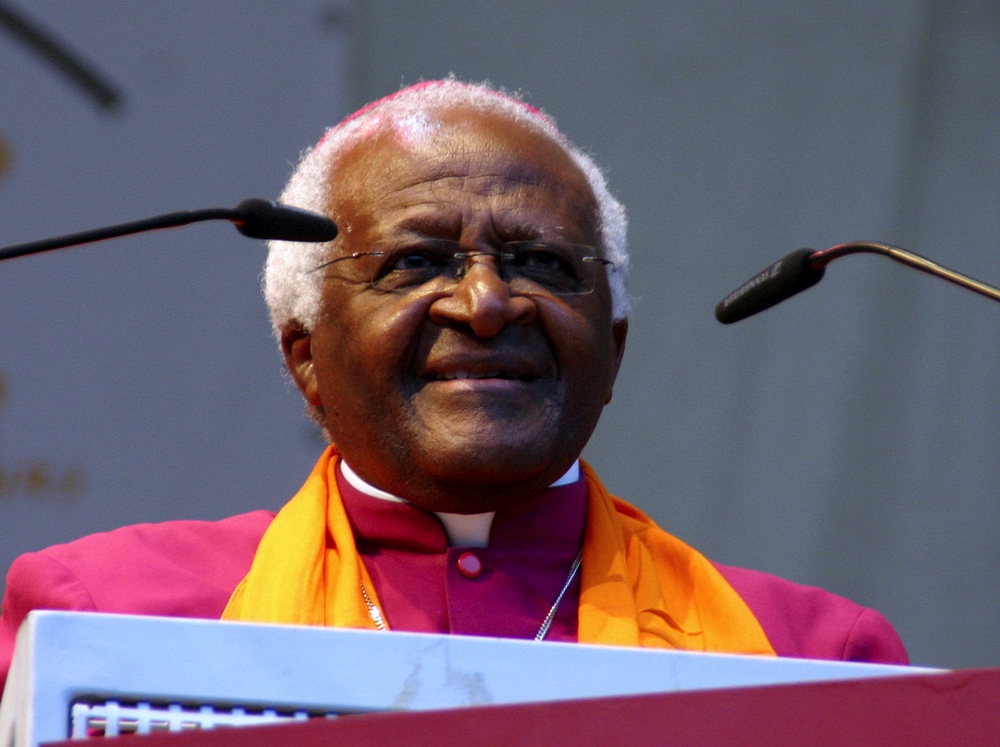
Where is true peace to be found? Archbishop Desmond Tutu might say it can be found in the African concept of “ubuntu.”

He says, “Ubuntu is a concept that we have in our Bantu languages at home. Ubuntu is the essence of being a person. It means that we are people through other people. We cannot be fully human alone. We are made for interdependence, we are made for family. When you have ubuntu, you embrace others. You are generous, compassionate.”

He also says that if the world had more ubuntu, there would be no war. The powerful would help the weak. That is where peace is to be found.

A story from World War II shines a spotlight on ubuntu. In 1942, the American consul ordered citizens home from the Persian Gulf, for fear they might get caught in the spreading conflict. Travel was difficult, and some civilians secured passage on the troop ship Mauritania. Passengers included thousands of Allied soldiers, 500 German prisoners of war and 25 civilian women and children.

The ship traveled slowly and cautiously, constantly in danger from hostile submarines patrolling the ocean depths. It was Christmas Eve and they had traveled for a full two months. They had only made it as far as the coastal waters of New Zealand and all on board were homesick, anxious and frightened. 

Someone came up with the idea of asking the captain for permission to sing Christmas carols for the German prisoners, who were surely as homesick and lonely as the passengers. Permission was granted and a small choral group made its way to the quarters where the unsuspecting prisoners were held. They decided to sing “Silent Night” first, as it was written in Germany by Joseph Mohr and was equally well known by the prisoners.

Within seconds of beginning the carol, a deafening clatter shook the floor. Hundreds of German soldiers sprang up and crowded the tiny windows in order to better see and hear the choristers. Tears streamed unashamedly down their faces. At that moment, everyone on both sides of the wall experienced the universal truth – that at the core of our being, all people everywhere are one. They experienced ubuntu. Hope and love broke down the barriers between warring nations and, for that moment at least, all were one family.

We are meant to be one. And only after we realize that amazing truth can we find what we need – true peace. 

And so, we pray: Lord, we have been alone for far too long… trying to make it through the world as an individual. There has been hatred, wars, injustice… and many things that separate the peoples of the world. Help us to finally see and understand that we are born for relationships to all your children in this world… “Ubuntu.” Amen.


Laughing at the Big “C”

Laughter and tears are part of living. But do you find enough time for laughter? I am not asking if you experience lots of good times. Of course we should laugh during the happy times. But do you also laugh during the difficult times?

Erma Bombeck is known for her humorous books, but she wrote one that covered a more serious topic: cancer in children. The book is titled, I Want to Grow Hair, I Want to Grow Up, I Want to Go to Boise (Harper and Row, 1989). Bombeck talks with numerous children with cancer and learns important life lessons from them. She learns, for instance, that cancer survivors know how to laugh.

She cites the experience of 15-year-old Jessica from Burlington, Vermont (USA). Jessica’s leg was amputated at the knee because of cancer. She was learning to wear a prosthesis. Jessica tells about playing soccer. She kicked the ball hard and it flew off in one direction while her artificial leg flew another way. Then “the tall, gorgeous person that I am,” she said, “convulsed on the ground in laughter.”

Jessica may not have laughed about her cancer, but she laughed about dealing with the consequences of it. And her laughter helped her cope.

Then there is the story of 17-year-old Betsy. She made her way to the radiation room for her regular radiation therapy. As usual, she dropped her hospital gown and, wearing only her birthday suit, climbed onto the table and waited. After a couple of moments she began to realize something disturbing: the extra people in the room were not the medical students she had thought, but rather painters giving an estimate on painting! Betsy laughs heartily about the incident. And like Jessica, her ability to laugh helped her to cope with one of the most difficult things a young person can endure — cancer.

Biblical wisdom teaches that “there is a time to weep and a time to laugh.” Do you find plenty of occasions for laughter? You can…if you also find reasons to laugh during the especially difficult times.

Survivors know how to laugh. If you can laugh even when the going is rough, you’ll make it. And you’ll smile at the end.

And so, we pray: Lord, I know people, even in my own family, who have or are dealing with that demon cancer. It is a horrible uncertainty to deal with moment by moment and day by day. It would be impossible to deal with if we lost our ability to laugh at something. Help us keep laughing knowing that our life is always in you and with you, and nothing can separate us from you love in Christ Jesus. Amen.

Grace and Peace
Steve

Have a Sense of Humor

A senator once took Will Rogers to the White House to meet President Coolidge. He warned the humorist that Coolidge never smiled. Rogers replied, “I’ll make him smile.” 

Inside the Oval Office, the senator introduced the two men.  “Will Rogers,” he said, “I’d like you to meet President Coolidge.” 

Deadpan, Rogers quipped, “I’m sorry, but I didn’t catch the name.” Coolidge smiled. 

Blues musician Corky Siegel says,  “Life is too important to take seriously.” 

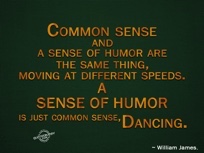
A sense of humor is essential. It is one of the most important means we possess to face the difficulties of life. And sometimes life can be difficult indeed.  

I use to see people every day with big problems: relationships breaking apart, unemployment, serious illness. Not a week goes by when I haven’t talked with someone agonizing with a suffering friend, or people who are addicted or in deep grief. Without a sense of humor about my own life, I don’t know if I could survive. I take what I do seriously, but I try not to take myself too seriously. Like the New York City cab driver who said, “It’s not the work that I enjoy so much, but the people I run into!” 

Here is an experiment: look for and find as much joy as possible for one full day. Try to enjoy the people you run into, the work you do, your leisure time and your relationships. Don’t forget to enjoy yourself – and take enough time to enjoy God. Try this experiment for one full day, and by evening you may be amazed to find yourself basking in the glow of a rekindled spirit. 

It just takes a day to find joy along the way.

And so, we pray: Lord, help me not to take myself so seriously that I lose my sense of humor. Without that humor life could be very dull and unfulfilling. Help me to continue to find the humor in life that I may laugh at myself, especially as others laugh at me and with me. Amen.

Grace and Peace
Steve

Strength Upon Strength

In an interesting experiment at Amherst College (Amherst, Massachusetts) a band of steel was secured around a young squash. As the squash grew, it exerted pressure on the steel band. Researchers wanted to know just how strong a growing squash could be, so they measured the force it brought to bear on its constraints. They initially estimated that it might be able to exert as much as 500 pounds of pressure, which is a rather remarkable feat in itself.

In one month, the squash was pressing the hoped-for 500 pounds. But it didn’t stop there. In two months it was applying 1,500 pounds against the steel band and soon the researchers measured 2,000 pounds of pressure. That is when they decided to strengthen the band which was now threatening to snap. As it grew, the squash applied more and more pressure in order to free itself of the constraint. It finally achieved the astounding force of 5,000 pounds of pressure to bear on the band (ten times their original estimation) – when the rind split open.

Researchers sliced it open and found it to be inedible, as it was filled with tough, coarse fibers that had grown specifically to push against the steel which held it in. Since the plant required great amounts of nutrients to gain the strength needed to break its bonds, its roots extended unusual distances in all directions. In fact, it had grown to be so large and powerful, it single-handedly took over the garden space.

Similarly, we may have no idea just how strong we really can be when faced with great obstacles. If a squash can exert that much physical pressure, how much more strength can human beings apply to a situation? Most of us are stronger than we realize. Chilean writer Isabel Allende reminds us, “We all have an unsuspected reserve of strength inside that emerges when life puts us to the test.”

Are you being tested? Do you face an immovable obstacle? Does it seem overwhelming? If so, remember the squash. Its single-minded purpose was to break the bonds which held it. If you patiently focus your energy – what problem can stand against the great mental, spiritual and physical strength you can bring to bear?

And so, we pray: O Lord, I know family and friends who are being tested in pressure situations as great or greater than that pumpkin. Be present in their struggle. Hold them close in your loving arms and allow them to know your Spirit is with them in that and every moment. Amen.

Grace and Peace
Steve

Indifference or Caring

I am passionate about some things. I love music – don’t think I would want to live without it. And I care quite a bit about some big things, like living my life fully and helping others to do the same. I care about the welfare of people and building a world where people matter. All people, not just some. I believe it is important to care deeply about a few things that matter.

Holocaust survivor Elie Wiesel says this about the importance of caring: 

 “The opposite of love is not hate, it’s indifference. 
 The opposite of art is not ugliness, it’s indifference. 
 The opposite of faith is not heresy, it’s indifference. 
 And the opposite of life is not death, it’s indifference.”

And what’s the opposite of indifference? It is concern. It’s caring. 

I think most people want to make a difference, even in a small way. They want their lives to count for something. But it can never happen until they care about something bigger than themselves. Something that really matters.

American president Teddy Roosevelt knew about passionate living. He never did anything in a small way. Several years after serving two terms as president, he decided to run again. The early part of his campaign consisted of traveling by train from one state to another to stump. 

Roosevelt reached Chicago on October 13, 1912 from Iowa. His throat was so sore from speaking that it had been necessary to cancel previous addresses in Indiana and Wisconsin. But this time he insisted on making a speech the next day in Milwaukee, no matter how he felt. 

As he left his hotel to go to the hall where a crowd was already gathered, Roosevelt was shot in the right breast in an assassination attempt. He did not know the extent of the injury – it might have been fatal as far as he knew – but he insisted on speaking to the crowd before allowing his gunshot wound to be treated. He told them that he would make this speech or die. He had something to say and there was no canceling.

Visibly pallid and sporting a bright red stain on his chest, he began in a low tone. “I am going to ask you to be very quiet and please excuse me from making a long speech,” he said. “I’ll do the best I can, but there is a bullet in my body.” He went on to minimize the injury and told his audience that he had a message to deliver and would speak as long as his life held out. Then he said, “It matters little about me, but it matters about the cause we fight for.” (He survived the incident, by the way.)

Causes do matter. And the world is changed by people who care deeply about causes – about things that matter. We don’t have to be particularly smart or talented. We don’t need a lot of money or education. All we really need is to be passionate about something important; something bigger than ourselves. And it’s that commitment to a worthwhile cause that changes the world. 

I know – not all of us are interested in changing the world. That’s okay. But any life will be significant when we expend energy and passion on important matters. 

And so, we pray: O Lord, Help us to not accept indifference, but strive for the caring causes which are for the benefit of all your people. Let indifference in have no quarter in our lives. Amen.

Grace and Peace
Steve

Love Even When We Are Unloveable

Science fiction writer Isaac Asimov penned this humorous poem:

“Tell me why the stars do shine,
Tell me why the ivy twines,
Tell me what makes skies so blue,
And I’ll tell you why I love you.

Nuclear fusion makes stars to shine,
Tropisms make the ivy twine,
Raleigh scattering make skies so blue,
Testicular hormones are why I love you.”

What happened to that poor man in the romance department? 

Actually, I suppose that what he lacks in inspiration he probably makes up for in accuracy. And accuracy is fine, but I like some mystery, too. I don’t want to analyze and dissect all of the wonder out of life.

There’s something mysterious about a pitch-black sky teeming with shining stars…something that causes my imagination to soar. And what about the mystery of nature? I can think of few things so thrilling as that sense of awe that explodes in my heart when I see a brilliantly blue sky over snow-capped mountain peaks. And the greatest mystery of all – love. What is more mysterious than a deep and almost perfect love felt between two otherwise imperfect people?

Love is mysterious. Robert Fulghum says, “We’re all a little weird. And life is a little weird. And when we find someone whose weirdness is compatible with ours, we join up with them and fall into mutually satisfying weirdness—and call it love—true love.”

Perhaps love has many faces. The faces easiest to see are ones of infatuation and romance. We speak of “falling in love” and feel, too, as if we are in free fall. This is the face of love that inspires songs and poetry and romance novels.

But the face of love I appreciate most is not romance, as much as I am drawn to it, but one I can always count on to be there. It is the face of love that looks more like commitment or devotion – devotion of a parent for a child, or of couples who’ve lived and loved together for years.

This particular face of love is not a magnet that attracts two people to each other, but glue that holds them together for the long term. It is a face of love often seen on parents and grandparents and close friends who have been through good times and bad with one another.

I recall a story about a husband and wife who were engaged in a minor dinnertime disagreement. To the children’s amazement, their father jumped up from the table, grabbed two sheets of paper, and said to his wife, “Let’s make a list of everything we don’t like about each other.”

She agreed and proceeded to write. He, meanwhile, sat and glowered. She looked up and he began to write. 

They finally finished. “Let’s exchange complaints,” he said and they passed their lists across the table.

She glanced at his sheet and pleaded, “Give mine back!” All down his sheet he had written: “I love you, I love you, I love you.” I presume he gave the paper back, for their children remember that moment with humor and fondness.

As much as I enjoy romance, it’s commitment that I need the most. I need to know a love I can depend on, a love that says, “I will be with you through it all. I love you. And I will love you even when you may not be all that lovable, for sometimes I’m not very lovable either. You can count on me – always.” 

Maybe love is mysterious, but that kind of love is solid. Rock solid. And, of all the faces of love, it’s my favorite. 

And so, we pray: Lord, love is very mysterious, even when I have too much wife or she has too much husband… it is rock solid devotion and commitment. Thank you for being the inspiration and Spirit in the midst of it all. Amen.

Grace and Peace
Steve