The Feeling May Become Permanent

Newscaster Paul Harvey once told about a woman who called the Butterball Turkey Company and said that she had a turkey that had been in her freezer for 23 years. She asked if it was still any good. She was told that if her freezer was at least zero degrees Fahrenheit, then the turkey was probably safe enough to eat. But they wouldn’t recommend that she eat it. The flavor would have deteriorated considerably. She said, “That’s what we thought. I guess we’ll just give it to the church.”

I suppose there are many reasons we choose to give. But people who enjoy sharing with others the most do not share simply because they have a need to get rid of something. Those who find the greatest joy from giving have learned to give from a deeper place; they give from their hearts. 

Santa Claus is becoming a universal symbol of giving. Millions of children write letters to Santa each year in hopes that they won’t be forgotten during his annual giving spree. Did you know that the US Post Office actually found ways to answer those letters to Santa Claus? They used to just stick them in the so-called dead letter box. But now some cities have programs that allow people to sort through these hand-written pleas, hopes and wishes and become “Santas” to others in need. They choose a letter and respond however they can. Most anyone can play Santa.

One letter that might have been discarded a few years ago, but was picked up by a volunteer Santa Claus, came from a boy named Donny. He wrote that he wanted a bike for Christmas and “some food and what I really need is love.”

Another volunteer Santa latched onto a letter from a young mother who wrote, “I lost my job…and I cannot afford to give my two children the things they need for the winter months.” That generous spirit helped with some necessities for the children.

“I like to go to their home on Christmas Eve,” one joyful Santa said. One year he bought presents for four children and a ham for their mother. Then he added this poignant observation: “The feeling you get is just incredible.”

I admit it – I don’t always get that feeling when I give. But then I don’t always give out of untainted motivations. Sometimes I give from other places. Sometimes I give out of social obligation or out of guilt. Or I give with an expectation for receiving back. But I give best when I give from that deeper place; when I give simply, freely and generously, and sometimes for no particular reason. I give best when I give from my heart.

And isn’t it true? Opportunities to give from the heart are not limited to a particular holiday season or cultural tradition. Whether we give food, money, an hour of time or a hug, we can give it sincerely and joyously.

But let me offer a word of caution. If you choose to give from your heart, be careful. The most incredible feeling might just overwhelm you. And if you continue in this behavior, that feeling may become permanent.

And so, we pray: Lord, help me to give from the heart so much that it becomes a permanent part of my life. Amen.

Grace and Peace
Steve

Having a Beautiful Heart

One grandfather quipped about his grandchildren: “My grandkids are four and six. The Pulitzer Prize winner is four and the brain surgeon is six.”

Parents and grandparents are understandably proud of the quick minds and impressive talents of their little ones. But let me tell you about another quality, perhaps even more important. A grandmother wrote to me and told me this story about her four-year-old granddaughter Skylar. 

It was Christmastime. Skylar had saved coins in a piggy bank all year and decided to buy presents for her family with her savings. But she also learned from announcements on television about a local homeless shelter called “The Road House.” She repeatedly asked her mother what “homeless” meant and why those children needed coats and warm clothes. The concept of people in such physical need deeply affected her.

Skylar’s mother took her to the store to buy Christmas presents. But instead of buying for herself or her family, she decided to use her savings for somebody at the shelter. They learned that there was a little girl staying there about Skylar’s age, and she purchased a warm coat, socks, gloves and crayons for the child. She also wanted to buy her a doll (a “baby,” as she called it), but when she discovered she didn’t have enough money, she left the doll behind. When Skylar got home, she selected one of her own much-loved dolls to give away. The baby went into a box with the other items.

She could hardly wait for Christmas. Skylar was not thinking about Santa Claus or any presents she might be getting. She was thinking only about going to the shelter and giving her carefully selected gifts to a little girl she had never met.

On Christmas Eve she and her family finally made the trip Skylar had been anticipating for so long. They drove to the shelter. There she presented her Christmas box to a grateful child. She was so filled with joy at truly touching someone else’s life that her family decided to make the journey to the shelter an annual tradition.

“Perhaps it’s good to have a beautiful mind, but an even greater gift is to have a beautiful heart,” says Nobel Laureate John Nash (“A Beautiful Mind”). He would have appreciated young Skylar’s heart.

Beautiful hearts don’t just happen. Nash calls it a gift, but it’s a gift in the way that faith or hope or love are gifts. And I’m convinced we have each been endowed with a beautiful heart. We may not always see it. We may not even believe it. But it’s a gift that came with birth and, every time we act selflessly, it grows a little.

And so, we pray: Lord, I have been blessed in so many ways through my life… parents, wife, child, grandchildren and all the folks in the churches I have served. Everywhere I have been I have witnessed people with beautiful hearts who go out of their way to give to uplift others. Help me too also have a beautiful heart. Amen.

Grace and Peace
Steve

Invest That Dime

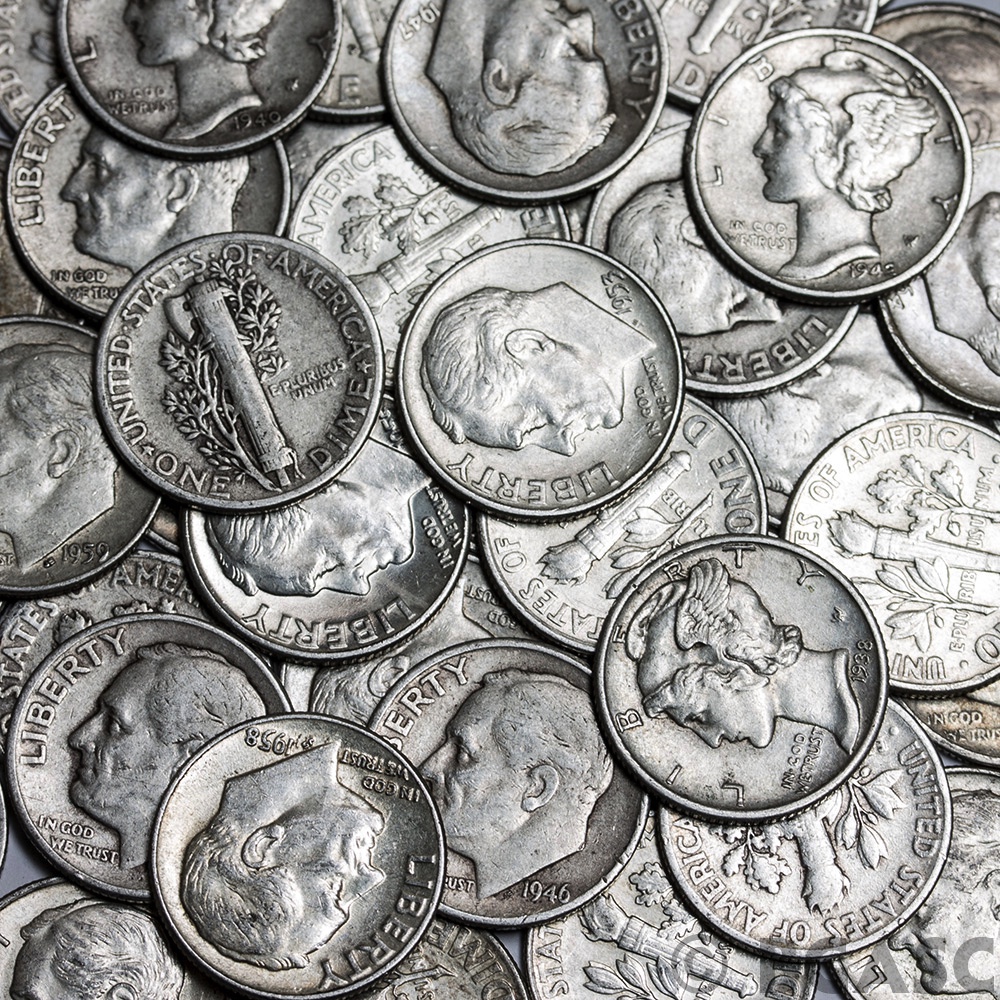
Can one dime make a difference? Here is a woman who turned a dime into millions of dollars. 

Her name was Martha Berry. This clever woman founded the Berry School in Rome, Georgia. She scraped together funds from every source possible. One day she approached Henry Ford, of Ford automobile fame, and asked for a contribution. Patronizingly, he reached into his pocket and pulled out a dime.

Rather than be insulted or discouraged by the “gift,” Miss Berry bought a package of seed peanuts with it. The seeds were planted and tended, and they eventually yielded a large crop, which she later sold.

Again she called on Mr. Ford. “Here’s the dime you gave me last year,” she said, handing him a coin. Then she told him of the return she had realized from his token investment.

Ford was so impressed that, in the years to come, he gave millions of dollars to the school.

Can one dime make a difference? Yes, if it is well invested.

How about one hour of your time? Can it make a difference? Or how about the life of one person? Can a life like yours or mine really make a difference? The answer to each of these questions is the same: Yes, if it is well invested.

Now…how are your investments doing?

And so, we pray: Lord, help us to take the little gift given, invest it, tend it, care for it till it produces a great harvest for you and others. Help us to make a difference with what we are given. Amen.

Grace and Peace
Steve

Take Me As I Am

On her 50th wedding anniversary, a woman revealed the secret of her long and happy marriage. She said, “On my wedding day, I decided to make a list of ten of my husband’s faults which, for the sake of the marriage, I would overlook.”

One of her guests asked her what some of the faults she chose to overlook were. “To tell you the truth,” she replied, “I never did get around to making that list. But whenever my husband did something that made me hopping mad, I would say to myself, ‘Lucky for him that’s one of the ten!’”

It’s nice to decide what to overlook. In relationships, I get plenty of practice overlooking the foibles of other people. And I suspect they get plenty of practice with me, too.

As they hung wallpaper together, one husband became frustrated with his wife. She seemed, to him, to be indifferent about the quality of her work. He felt she was doing a poor job. He finally put it into words this way: “The problem is that I’m a perfectionist and you’re not.”   

“Exactly!” she replied. “That’s why you married me and I married you!”

Miss Perfect certainly did one thing well. She knew how to overlook annoying observations from her perfectionist husband.

We human beings are nothing if not flawed and imperfect. But, the point is, people are not meant to be without blemish. We’re scraped and scarred, flawed on the inside and marred on outside. It’s just the way we are. (Sometimes I think it’s one of our more endearing qualities.) I never want to forget that “perfect” is only found in the dictionary.   

Even pottery may be closer to perfection than we humans, if Belleek Pottery in Ireland is any example. I hear that every finished piece there undergoes a final inspection. It is held up to a fierce, bright light and examined for imperfections.  If even the slightest flaw is detected, the cup or plate or vase or sugar bowl is smashed to pieces. That’s right. The blemished piece is never sold as a “second.” If Belleek pottery is not flawless, it is reckoned to be no good at all. No doubt other makers of fine china and crystal operate the same way. 

I surely cannot stand up to that kind of scrutiny. I have flaws I haven’t even begun to explore yet. 

How much pain prompted the words of that sensitive artist Vincent van Gogh when he lamented, “I wish they would only take me as I am.” How many times a day are those words repeated by countless people feeling the sting of rejection? To be accepted as one is and not discarded as useless is more than just a wish; it is a deep, human need. 

All of us sport an invisible sign around our necks — “AS IS.” It means, take me as I am. I may not become what you want me to be. And I’m far, far from perfect. But I have some great qualities, too, as well as my share of faults. You will have to take me “AS IS” and I’ll take you that way, too. 

AS IS will be the best guarantee any of us can offer. But quite frankly, most of the time we’re getting a pretty good deal.

And so, we pray: Lord, I fell in love with a hymn sang by the Myers Park UMC choir several years ago: “Take, O Take Me As I Am.” Tears came to my eyes as I was so beautifully reminded of that is how Jesus takes us… and loves us anyway. Lord, that is mercy beyond measure. Thank you for your mercy and grace and help me to seek to do the same with all my brothers and sisters. Amen.

Grace and Peace
Steve

What Day is It???

I don’t know about you, but I don’t spend a great deal of time worrying about how I appear to other people. I know I’m not perfect. Far from it. But I figure that there is an upside to my own flaws, faults and imperfections: for one thing, they seem to bring joy to others. Maybe that’s reason enough not to over-polish.

Or maybe it’s just that I underestimate the seriousness of my own shortcomings. I might be like the man who was driving a car with a bumper sticker that read, “Hang up and drive.” A police officer was pleased to spot the sticker, as she had witnessed too many accidents caused by motorists talking on cell phones. Wanting to signal her approval to the driver, she pulled up alongside the car. But when she glanced over, she was dismayed to see him peering into his rear-view mirror and shaving. 

At least he wasn’t talking on his mobile phone. 

Maybe it is just easier to spot the flaws in others. It’s like the camel. An African proverb states, “The camel never sees its own hump, but that of its brother is always before its eyes.” I probably don’t see my own humps very clearly. Or, as writer Margaret Halsey once said, “Whenever I dwell for any length of time on my own shortcomings, they gradually begin to seem mild, harmless, rather engaging little things, not at all like the staring defects in other people’s characters.”

So I can appreciate the story of an elderly couple who, while on an automobile trip, stopped at a roadside restaurant for lunch. The woman left her eye glasses on the table, but didn’t miss them until they were back on the highway. And, of course, it was difficult to turn around by then. Her husband fussed and complained all the way back to the restaurant about her “always leaving her glasses” behind. They finally arrived, and as the woman got out of the car to retrieve her glasses, the old man said, “While you’re in there, you may as well get my hat, too.” 

Psychologist Carl Jung puts a powerful spin on this phenomenon of seeing other’s faults more clearly than our own. He teaches that “everything that irritates us about others can lead us to an understanding of ourselves.” Or, put another way, the humps we can’t help but seeing in others are a lot like the humps others see in us. Or, perhaps they are like the humps we see in ourselves.

So, what would happen if we’d look at other people’s faults and humps as a gift? After all, they’re teaching us about ourselves. 

And that’s what makes us different from camels.

And so, we pray: Lord, there are so many camels surrounding me with great big humps… especially on Wednesdays. I wonder what humps they are seeing in me? Help me to see my own faults and failures before I see them in others. Help me to forgive first… before I even think to point a finger at someone else. Amen.

Seeing the Morning Dawn

Many years ago Bertrand Russell, the English philosopher and mathematician, was imprisoned for opposing World War I. “When I reported to the warder (guard in an English prison),” Russell said, “he asked me the customary questions – name, age, place of residence. Then he inquired, ‘Religious affiliation?’”

Russell replied, “Agnostic.”

The poor man looked up. “How do you spell that?”

He spelled it for him. The warder wrote the word carefully on the admission form, then sighed, “Oh, well; there are a great many sects, but I suppose they all worship the same God.”

I’m sure Russell could not help but chuckle.

It is true, however, that there exist many spiritual paths. The world has always teemed with a wide variety of spiritual thought and many differing journeys of the heart. But too often the world has used these differences as a weapon. How much agony has been wrought by what should be a thing of beauty – religious passion?

I appreciate an old Jewish story that tells of a rabbi who asked his disciples, “How do you know when the night is giving way and the morning is coming?”

One of the followers stood and said, “Teacher, won’t you know that night is fading when, through the dim light, you can see an animal and recognize whether it is a sheep or a dog?”

The rabbi answered, “No.”

“Rabbi,” asked another, “won’t you know that the dawn is coming when you can see clearly enough to distinguish whether a tree is a fig or an olive?”

“No,” responded the teacher. “You’ll know that the night has passed when you can look at any man and any woman and discern that you are looking at a brother or a sister. Until you can see with that clarity, the night will always be with us.”

The night has been long. Isn’t it time for dawn to break? No matter who we are, no matter what religion we profess, isn’t it time for us to see one another as the sisters and brothers we are? All of us? Only then will we know that night has passed and a new day has dawned. 

And so, we pray: Lord, I have been in the darkness’s way too long. Help me to see you in ALL my brothers and sisters… all your children in the world. Amen.

Who’s Got Your Back?

Author Jack Canfield said, “Human beings are not designed to go through life alone. No one has to bear the burden of tough times all by themselves.”

A television nature program captured an image of this idea well. It was an episode about a baby bear.

The cub was one of two babies born to a mother black bear, but his sibling died in childbirth. Not too long afterward, Mama Bear also died. The little cub was left alone to fend in the world.

But he was fortunate. He soon came across a huge male black bear who took a liking to the little guy. By the end of the day the adoption papers were signed and the little cub had a new friend and father. 

Papa Bear showed the cub how to forage for berries. He taught him which plants he could eat and which to leave alone. He showed him how to fish. Papa Bear taught the cub all the things a bear needs to know to get along in the world.

The two were inseparable…until the day they separated. The little cub found himself all alone when a hungry mountain lion crept up. The two locked eyes and terror ran through the bear’s heart. So he did the only he knew to do, the thing Papa Bear had taught…he rose up on his hind legs, showed teeth and claws, looked his enemy right in the eye and roared a fierce roar. Well, it wasn’t really a roar at all, but a tiny squeak. 

The camera panned back to the mountain lion who must have been amused at the little guy, and was surely preparing to enjoy a tasty lunch. The audience expected the lion to pounce any second. But something strange happened. A look of fear crossed the cougar’s face, he slowly backed off a few steps and then turned and bounded away.

The camera panned back to the frightened cub and now the audience could see what the little bear could not. Behind the cub, but not too far back, stood Papa Bear – up on his hind legs, all teeth and claws, with a deadly gleam in his eye. He didn’t growl, but then he didn’t have to. The lion got the message.

I love the image of the powerful black bear, ready to go to battle for a vulnerable cub. And that is an image I always want to keep in mind. No matter how helpless, frightened or vulnerable we feel, there is a strong and mighty force just behind us. That force is made up of people who watch out for us. Family and friends, children and colleagues and even strangers. There are more people behind you and me, ready to step in when needed, than we may ever know. 

We don’t have to go through this world all alone. And sometimes we will need extra help. We may need people to pull us through, to watch our backs or just to stand by.

Who’s got your back? Will you let them help?

Grace and Peace
Steve

The Gift of Life

I once clipped a strange story from the newspaper. It was about a man named Jose Estrada who drove to a popular trail where he like to jog. While Estrada was running, another jogger on the same trail collapsed and died of a heart attack. The man’s body was taken to a nearby hospital where authorities found a car key in his pocket, but no identification. 

Assuming they would be able to find the name of the deceased man in his automobile registration papers, they brought the key back to a parking lot near the jogging trail. They figured that if they tried the key in various locked doors of cars parked by the trail, they might eventually find his car and learn who he was. So they experimented until they were able to open the doors of one of the vehicles. 

Now, here’s where the story gets strange. The key opened the door of Estrada’s pickup truck. They examined Estrada’s registration papers and notified his wife of her husband’s untimely death. They asked her to come to the hospital and identify his body.

And here is where the story gets stranger still. Mrs. Estrada saw the body on the table with a tube snaking from his mouth, his eyes taped shut and wearing jogging clothing much like her husband wore. In her distraught condition she assumed the body belonged to Jose and signed the death certificate.
    
Meanwhile, Jose Estrada finished running, drove back home and promptly learned from a friend, who was more than stunned to encounter him in the flesh, that he was supposed to be dead. He immediately sped to the hospital and strode, as big as life, into the waiting room. His startled wife fell into his arms laughing and crying. The only thing she managed to spurt out was, “Jose, if you ever die on me again, I’ll kill you myself.” After all, he was dead and then he was alive… he was lost and then he was found. All in a single day. 

Eventually, the poor deceased man was properly identified and his family contacted. For this man’s family, as well as for Estrada’s wife, I wonder what thoughts first surfaced when they received news of the untimely death. Did they try to recall their last moments with him? Did they try to remember if they told him they loved him that morning? Was there an argument? Were there regrets?

How fragile life can be. I suspect that, if life came in a package, it would arrive in a box labeled, “Fragile: Handle with Care.” It is delicate and can be damaged in a moment. And I also suspect that, if life came in a package, it would arrive as a gift. It is undeserved and priceless. Which of us earned it and who could ever afford it?

My challenge is to remember that life is fragile. And it is an awesome gift. But what I want to remember most of all is that the people in my life, these beautiful gifts, are also fragile. And they, especially, need to be handled with care.

Grace and Peace
Steve

Much Obliged, Lord

Like most parents, we sought to teach our son to say “thank you” frequently and hoped that giving thanks might become a life habit. After all, silent gratitude isn’t much use to anyone. But I think that what we hoped to teach him was not simply to say thanks, but to feel it. I believe that thankful people are happy people.

The late Dr. Fulton Oursler used to tell of an old woman who took care of him when he was a child — a woman who not only expressed her thanks, but felt it. Anna was a former American slave who, after emancipation, was hired by the family for many years.

He remembered her sitting at the kitchen table, her hands folded and her eyes gazing upward as she prayed, “Much obliged, Lord, for my vittles.” He asked her what vittles were and she replied that they were food and drink. He told her that she would get food and drink whether or not she gave thanks, and Anna said, “Yes, we’ll get our vittles, but it makes ‘em taste better when we’re thankful.”

She told him that an old preacher taught her, as a little girl, to always look for things to be grateful for. So, as soon as she awoke each morning, she asked herself, “What is the first thing I can be grateful for today?” Sometimes the smell of early-morning coffee perking in the kitchen found its way to her room. On those mornings, the aroma prompted her to say, “Much obliged, Lord, for the coffee. And much obliged, too, for the smell of it!”

Young Fulton grew up and left home. One day he received a message that Anna was dying. He returned home and found her in bed with her hands folded over her white sheets, just as he had seen them folded in prayer over her white apron at the kitchen table so many times before. 

He wondered what she could give thanks for at a time like this. As if reading his mind, she opened her eyes and gazed at the loving faces around her bed. Then, shutting her eyes again, she said quietly, “Much obliged, Lord, for such fine friends.”

Oursler was deeply influenced by Anna’s uncanny ability to always find some reason to be “much obliged.” This wise woman taught him a secret that many people have never learned: she taught him how to be happy.

And so, we pray: Lord, as Anna said so faithfully and deeply felt… help us to be much obliged for all you have given us… especially your love and grace. Amen.

Grace and Peace
Steve

Heading Home

I once clipped a funny story from Reader’s Digest submitted by Joanne Mitchell. She wrote, “My brother adopted a snake named Slinky, whose most disagreeable trait was eating live mice. Once I was pressed into going to the pet store to buy Slinky’s dinner. The worst part of this wasn’t choosing the juiciest-looking creatures or turning down the clerk who wanted to sell me vitamins to ensure their longevity. The hardest part was carrying the poor things out in a box bearing the words ‘Thank you for giving me a home.’”

That’s a little hard to take. Dinner with Slinky cannot be a mouse’s idea of going home.Another woman tells of a time when she was at home with her children and the telephone rang. In going to answer it, she tripped on a rug, reached out for something to hold on to and grabbed the telephone table. It crashed to the floor and jarred the receiver from the cradle. The table fell on top of the family dog, which leaped up barking and howling. The mother’s three-year-old son, startled by this noise, broke into loud screams. The woman mumbled some colorful words and finally managed to pick up the receiver and lift it to her ear. Before she could answer, she heard her husband’s voice over the phone say, “Nobody’s said hello yet, but I’m positive I have the right number.”

Now that sounds all-too-typical – from peace to pandemonium in about two seconds. Any of us who have raised children or even any of us who WERE children probably get it.Families today come in all different shapes and sizes. And when peace turns into pandemonium, one may long to get away from it all, at least for a while. But the fact is, we each are born into families and we seem to have an irresistible urge to start new ones. At a deep level I believe we know that the family is just about the most important and probably the most enduring institution ever created. Regardless of what a family looks like, whether or not children are present, home is a place where our souls can finally connect with the soul of another; a place where we can, and should, feel safe, cared for and even special.

In 1688 Johannes Hofer, a Swiss medical student, coined a word to describe an illness whose symptoms include insomnia, anorexia, palpitations, stupor, and, above all, a persistent thinking of home. The word he coined was “nostalgia.” There is a yearning within the human heart to return to that place where we were secure, loved and made to feel important.Songwriter Paul Simon picks up the feeling when he sings that “every stranger’s face I see reminds me that I long to be homeward bound…” 

If we can’t be homeward bound, can we make “home” out of where we are? Home may be as much a state of being as a place. We talk about feeling at home when we feel at peace or when we feel comforted. “I am at home in this place,” we might say. It’s a state of well-being and solace.If home is as much about attitude as it is about latitude, then we never need feel too far from home. That’s good to know, especially during those times when we find our thoughts homeward bound. Can you make the place you are a space of peace? Can you find comfort in your surroundings and warmth in the company of friends? If so, even if you’re not at the place you live, you will be at home.

If you cannot make it home for whatever reason, take the time to be at home wherever you are and be thankful for the home you have been given. Amen

Grace and Peace
Steve