Earth’s Crammed With Heaven

I ran across this story told by a first time Girl Scout leader about a camp out with her new troop. She related this story:

I stumbled out the door of a mountain cabin where I was spending the weekend working with youth and their families at a rustic resort center. I had a 6:30 AM appointment to keep and squinted from the early autumn sun peeking over pine-blanketed mountaintops.

I was started by a voice behind me. “Today is a miracle!” I turned to find one of the teenagers following behind.

“How?” I asked her. It looked like it might be pleasantly warm later in the day. Otherwise, fairly ordinary. The word “miracle” seemed like an overstatement. Anyway, I wasn’t sure if I could handle much excitement this early in the morning.

“Think about it,” she smiled. “The sun rose, didn’t it?”

“Yeah.” I found it easy to hide any enthusiasm. It seemed to rise on every other morning without my getting involved.

“That’s a miracle! It is miraculous that the earth turns as it does. At night, the sun goes down and in the morning it rises. It just happens!”

I pretty much already had this figured out. I rubbed sleep from my eyes. I was also busy thinking about how to get a cup of coffee.

“And look at the mountains! Covered with trees and grass, they look so beautiful. And there,” she pointed, “a valley. It’s incredible.”

Was she always this perky? And shouldn’t there be a rule against perkiness this early in the morning? Especially before coffee?

“Did you notice the wildflowers?” she continued. “It all smells so fresh and clean and so good.” She took a deep breath and I thought I might have caught a sparkle in her eyes. Though it may have also been a trick of the light. “All of nature receives water and sunlight and everything it needs. Things grow and blossom – it really is lovely.” 

Now I started to worry. I thought I was actually coming around. Well, a little bit, anyway. Is perkiness contagious? I felt something stirring inside. Up until then I thought this was just an ordinary morning in the mountains. I didn’t know what spell she was secretly weaving, but she had a point. It really was beautiful, even if there was nothing magic about it.  

Then, with a smile that gave her pronouncement a note of finality, she said, “And best of all, it will happen again tomorrow. And the next day. And the next!” Then she sighed. “See? It’s a miracle morning.”

In her poem “Aurora Leigh,” Elizabeth Barrett Browning wrote:

    Earth’s crammed with heaven,
    And every common bush afire with God:
    But only he who sees, takes off his shoes,
    The rest sit round it, and pluck blackberries…

Along the early morning path, my friend had removed her shoes. For her, earth was “crammed with heaven” and “every bush afire.” It wasn’t just perkiness; she had eyes to see what I had completely missed. I was, as Browning might say, sitting around plucking blackberries. 

I haven’t seen that young woman for many years. She’s grown up now. Maybe she has a family of her own. She’s no doubt seen a good measure of heartache and trouble – who hasn’t? But I would be surprised if she isn’t basically a happy and contented person. Why? Because she discovered a valuable secret about happiness – she learned to find wonder in commonplace things and to feel gratitude for the ordinary. And life is nothing if not filled with the commonplace and ordinary. 

After all, if a single morning can hold so much wonder for her, then a lifetime of mornings, not to mention evenings and everything in between, should keep her going through whatever life throws her way.

And so, we pray: Lord, wow do we ever miss the miracle before us each and every day. Help us to take our shoes off and see you in everything and everyone. Amen.

Grace and Peace
Steve

Becoming a Happier Person

A man lay in a hospital bed worried about whether he would live or die. He called his pastor to come pray for him. He told her that if he got well, he’d donate $20,000 to the church.

The pastor prayed and the man eventually DID get well and returned home. But no check came to the church. The pastor paid him a visit.

“I see you’re doing quite well now,” she observed. “I was just wondering about the promise you made.”

“What promise?” he asked.

“You said you’d give $20,000 to the church if you recovered.”

“I did?” he exclaimed. “That goes to show you just how sick I really was!”

It is easy to give thanks — or to show it — when we feel grateful. But gratitude is not a feeling we can manufacture. Nor are we born feeling especially grateful.

Children don’t express much thanks by nature. Conveying appreciation is something we learn. And, here’s the good news, we have a lifetime to get better at it.

We teach our children to say thanks and, in time, they develop stronger feelings of gratitude. My son could talk before he was weaned from diapers, but one thing he never said was, “Thank you for changing my dirty diapers, Mom/Dad. I know that is a messy job. I appreciate all you and Mom are doing for me.” Too bad. Sometimes we deserved a BIG thank you.

Once he became car sick during a road trip, and I think he should have written a long thank-you letter to us for cleaning it up. Even though his mother and I spent almost a half hour scrubbing the carpet in a convenience store parking lot at seven degrees below hell… he never did said, “Gosh, guys, you’re the greatest parents ever! I am SO lucky to be part of this family.”

But that’s all right. Naturally, we wouldn’t expect small children to thank their parents for being parents. And for most people, feelings of gratitude come with empathy as we mature. The more we express thanks, the more gratitude we feel. The more gratitude we feel, the more we express thanks. It’s circular, and it leads to a happier life. But, I must add, my son is a very happy – thankful person – seen by the way he lives his life everyday. And that is a beautiful way to say thank you to everyone who has touched his life.

And that’s the point. People who are generally happier got that way, at least in part, through gratitude.  

Here are three simple steps to help anybody live more thankfully and to respond more authentically.

First, recognize WHEN a thankful response is appropriate. We take for granted too many of the things that we should be giving thanks for.

Second, spend a moment reflecting on how another’s thoughtfulness makes you feel. Be intentional about this.

Then third, from a sincere feeling of gratitude, give thanks. Say it. Write it. It doesn’t matter. But when you do, you will discover a side benefit – you are becoming a happier person.

And so, we pray: Lord, I always need to be a happier person… most every day. Help me to be grateful for all of my life. Amen.

Grace and Peace
Steve

Did You Get That Word Right?

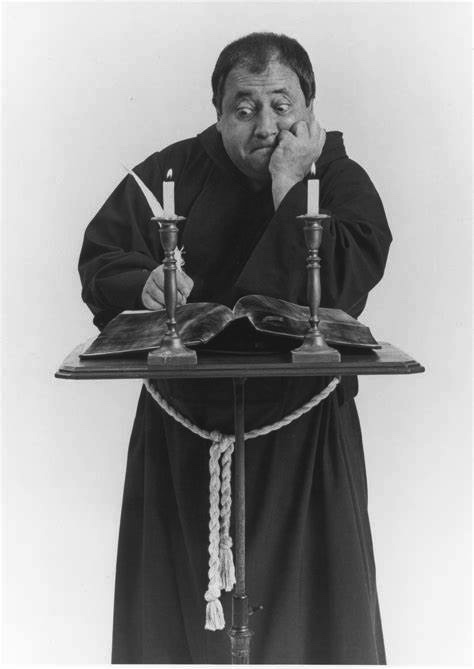
I heard a funny story of an ancient monastery charged with copying old books and scrolls for the faith.

One day, Father Florian, who headed the work of the scriptorium, was asked by a new monk: “Does not the copying by hand of other copies allow for chances of error? How do we know we are not copying the mistakes of someone else? Are they ever checked against the originals?”

“A very good point,” Father Florian agreed. “I will take one of the latest books down to the vault and compare it to the original.”

After a day had passed and the priest had not returned, the monks began to worry. When they went to the vault, they found him weeping over an ancient manuscript.

“What is the problem, Father?” asked one of the monks.

“A mistake,” he sobbed. “The word was supposed to be ‘celebrate!’”

We can be assured that “celibate” was never confused with “celebrate,” but “celebrate” is a word we may need to hear more often. 

Is there plenty of celebration in your life? How about your spiritual life? Is it an exercise in following rules and practices? Or does it look more like a joyous celebration?

Not that we can be, or ought to be, happy all the time. Life isn’t like that. There is, after all, a time for laughter and a time for tears. And besides, there is much growth in pain. But “celebrate” is one of those great words that resides at the heart of a vibrant life. For the truth is…the more we celebrate, the more we find to celebrate. And the more we find to celebrate, the more fully we live.

So, as William Arthur Ward exhorts:

“Celebrate your life joyfully; 
Celebrate yourself humbly;
Celebrate your blessings gratefully.”

When it comes to full and abundant living, the monk got it right. The word is “CELEBRATE.”

And so, we pray: Lord help me to celebrate that I may fully live. Amen

Grace and Peace
Steve

Having a Good Vision

Did you know that the English word “thanks” comes from the same root word as “think”? And they not only share a similar background, they are related in another way. It seems the more we think, the more we thank. One woman illustrated how thinking and thanking are related in a visit to the eye doctor.

She complained to her ophthalmologist that, as she grew older, her eyesight was getting worse. He examined her eyes and could not be encouraging about the future of her eyesight. But to his surprise, she did not seem to be upset. She told him all she was grateful for: her deceased husband; her children and their families; her friends; the many years she has enjoyed upon this earth; her vast library of memories. She had done a great deal of thinking about these things. “My eyesight is getting worse,” she summarized, “but I’m not going to fret over that.”

Her doctor later made this observation: “Her eyesight is poor, but her vision is better than most people.” She clearly saw what many never see — all the good in her life. And she was content.

When we take time to think, and make time to thank, we see more clearly.

It sounds like a good way to improve your vision.

And so, we pray: Lord, my vision is really bad at times simply because I don’t take the time to see all the good in my life… all the way through. Help me to see more clearly. Amen

Grace and Peace
Steve

How Happy Are We?

Do you remember the story of the two men who were walking through a pasture and spotted an enraged bull? They instantly darted toward the nearest fence. The storming bull followed in hot pursuit and it was soon apparent they wouldn’t make it in time. Terrified, one shouted to the other, “Can you pray, John? We’re not going to make it!”
John answered, “I don’t know how to pray.”

“You have to!” panted his companion. “The bull is catching up to us.”

“All right,” agreed John, Then he prayed the only prayer he knew, one he had heard his father pray often at the dinner table: ‘O Lord, for what we are about to receive, make us truly thankful.'”

Not a bad prayer, actually, at least in other circumstances. And not a bad attitude about life. But even as important as being truly thankful, it is necessary to act truly thankful.

Italian actor, director, singer-songwriter and poet Roberto Benigni believes in the importance of acting thankful. Benigni won the 1998 Academy Award for best actor for his performance in the film “Life Is Beautiful.” In his joy at receiving the honor, he actually danced over the tops of chairs and leaped up on stage, applauding the audience. The effusive Benigni believes that it’s a sign of mediocrity when one demonstrates gratitude with moderation. And he is anything but moderate when showing gratitude.

How are you at showing your gratitude? Most of us are not as demonstrative as Benigni, but acting truly thankful can actually help us feel more grateful. 

William Arthur Ward said, “Feeling gratitude and not expressing it is like wrapping a present and not giving it.” Who would wrap a present and not give it? And once the present is given, how do you feel? The truth is…the more we express our gratitude, the happier we are. For it isn’t happiness that makes us grateful, but gratitude that makes us happy. 

How happy do you want to be?

And so, we pray: Lord help me to be truly happy by being truly thankful. Amen.

Grace and Peace
Steve

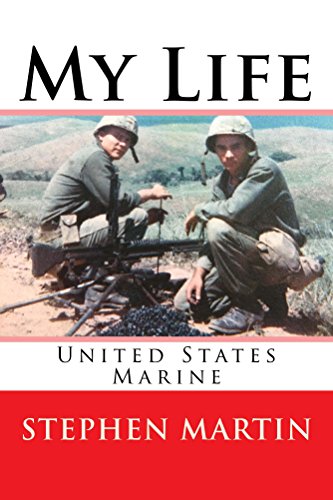
Mean as a Rattlesnake – War Stories

For many soldiers, the war didn’t end when World War II was declared over. There was still the imagery of what they had seen and what they had done to stay alive.

They had had to survive in a foreign land while their families had had to wait and pray for their return.

A date in a history book might define a time for a country’s surrender or victory, but the battles continued for some like Earl Gonzales.

The war changed Gonzales, like most young men his age. He left to fight at just 17, and when he returned, he found himself struggling to come to grips with what he had seen.

Gonzales served in the Army, assigned to the 935th Field Artillery Battalion. He spent the war pummeling the Nazis with artillery shells. That’s what he was about to do in May 1945 when the war ended suddenly. His unit had a full volley of shells ready to fire when they were interrupted by a frantic officer.

“Hold your fire! The war is over!” the officer shouted.

The unit erupted in joy. Several days later, he took a joy ride on a discarded German motorcycle.

 “It was beautiful,” Gonzales said. “It had camouflage and a sidecar. I used to have a Harley, so I knew how to ride. I said to my buddy, Charlie, ‘Get in that sidecar, and let’s take a ride.’ “

The pair zoomed off on a German highway traveling up to 190 km per hour, Gonzales said. That was, until they rounded a turn to see what appeared to be an endless column of soldiers marching in their direction. The soldiers were Germans, and they were armed to the teeth.

“You couldn’t see the end of it, there were so many of them,” he said. “It scared the hell out of me. I turned that motorcycle and shot back to our company to tell the captain.”

What Gonzales didn’t know was the column of soldiers was coming to surrender. He spent the remainder of his time in Europe guarding prisoners, including a German officer who demanded Gonzales carry his suitcase like a valet.

“I kicked his suitcase and told him if he didn’t get off that truck, I was going to blow his head off,” Gonzales said.

The end of the war was perhaps the most difficult time in his life. He returned to his native Southern California, living with his parents for a time but never far away from what he saw.

“I was nervous and mean as a rattlesnake,” he said. “I didn’t trust anybody. I didn’t want to be around anybody. I carried a pistol that I took off a dead German private everywhere I went.”

Gonzales had become so paranoid he couldn’t stand to have people walking behind him on the street. When he went to a restaurant, he couldn’t sit with his back to the door. He assaulted a man who simply asked him for a cigarette and a light.

“I said, ‘You want me to give you a cigarette and you want me to light it for you? Do you want me to kick you in the chest to get your lungs going, too?’ ” Gonzales said. “Then, I just whipped up on the guy.”

He also became a drunk, consuming up to a fifth of whiskey a day. If not for the well-timed words of his father, his life might have taken a different course.

“I got up one morning and reached under the bed and pulled out a bottle of Wild Turkey,” Gonzales said. “Just about then, my dad peeked into my room and saw me getting ready to take a swig from that bottle.”

His father’s words were simple and cut him deep.

“He said: ‘Son, you see what you’re doing there. That’s the first steps to becoming an alcoholic.’ He walked out and shut the door. I went over to the sink and poured that bottle out and didn’t take another drink.”

Gonzales, now 91, eventually settled down and opened several businesses in Southern California. He married and had two children.

When Gonzales’ wife, Christine, was diagnosed with breast cancer, the family moved to Oklahoma to be closer to her family. She died at 39, and Earl never remarried.

He ran an upholstery business in Oklahoma City and still lives in the same home he moved into with his wife more than 45 years ago.

“I don’t think anyone ever got over what they saw over there,” he said. “But I eventually settled down and made a life for myself.”

I realize that we are all wounded in some way by the happenings of war. I really don’t think human beings were ever meant to participate in the horrors of war… what we experience… what we see, smell, and feel… what we do and have done to us… well, it just has a way of getting into our psyche and I am not sure it ever gets out. It may get better. We may learn how to cope… but it is always there… the wounds of war continue to bleed.

I salute all my brothers and sisters who served… those who are still fighting the battles from over there – every day over here. I pay special honor to those buddies who gave their all in the battles of war. Your courage and sacrifice will always be remembered.

Semper Fi
Steve

The Best Teachers

Did you know that ninety percent of the world’s ice covers Antarctica? This ice also represents most of the fresh water in the world. Yet Antarctica is the driest place on the planet, with an absolute humidity lower than the Gobi desert.

If you’re into biology, you may know this about the Mayfly — after hatching, it takes up to three years to grow up, and then spends only one day as an adult. During that day it mates, lays eggs and expires. That last day must be absolutely spectacular.

Next time you dust your house, you may be interested to know that most of the dust particles you are removing are actually tiny bits of dead skin. Don’t even ask how much dead skin has made its way into your favorite pillow.

Did you know that the Mona Lisa has no eyebrows?

Or that that 80% of your brain is water? Well, mine anyway.

You’ve heard the expression “having a lark.” Those who are interested in language might want to know that group of larks is called an exaltation. A group of owls is called a parliament. A group of crows is called a murder. A group of rhinos is called a crash, which seems to make some sense. But here’s the best of all: a group of Unicorns is called a blessing.

As interesting as all of these facts are, I doubt any of them is bound to significantly change your life. The stuff we need to know in order to live happier, healthier and more meaningful lives does not usually come from tidbits of knowledge. More often it comes from people; and especially, people who mean something to us. Let me explain.

For Ross Perot, the kind of knowledge that made the greatest difference in his life was actually gleaned from his mother. The American businessman and one-time presidential candidate made billions of dollars from the technology industry. But his mother, who raised him before the phrase “computer age” was ever coined, taught him how to live. She taught him one of the greatest lessons of all: she taught him about compassion for the less fortunate.

Perot remembers the days of America’s Great Depression. “Hoboes” regularly knocked on their door asking for a little food. It puzzled young Ross that his house seemed to be singled out on their street. One day he learned why. On the curb in front of their house someone had etched a white mark, indicating to fellow travelers that this house was an “easy mark.” This fact disturbed the boy and he asked his mother if she wanted him to erase the signal. She told him to leave it there. It was a lesson in compassion he never forgot.

Some of the most essential life lessons and wisdom young Ross acquired did not come from a book or a classroom. They were lessons that came from those people closest to him. Many concerned themselves with the heart and spirit. They taught him about the world and the best way to live in it.

Our greatest teachers are usually those who did not volunteer for the job. They are parents and friends, spouses and children. Much great wisdom is learned best from the example of those closest to us.

And the remarkable fact is this: you are a great teacher. You teach powerful lessons every day of your life. You teach them simply by the way you live; by the way you respond to the world; and, by the little decisions you make. I wonder — who’s watching and learning?

And so, we pray: Lord, help me to be a better teacher that others may be empowered and uplifted by the way I live my life each day. Amen.

Grace and Peace
Steve

There is a Hole in The World

Do you remember the Eagle’s song “Hole in the World”? It begins like this:

There’s a hole in the world tonight.
There’s a cloud of fear and sorrow.
There’s a hole in the world tonight.
Don’t let there be a hole in the world tomorrow.

[Music and lyrics by Don Henley and Glenn Frey]

I am an optimist and constantly look for the best. But it does seem, at least at times, that there is a hole in the world.

We live in a day of almost unrestrained violence. Children can be snatched from homes and slain at school. Bombs and missiles are exploded in public places. There is war and there are rumors of war. No community, no race, no nation is immune to nor protected from a growing culture of violence. It’s as if there is a hole in the world. Now, more than ever, we need to learn a different way, for the path we’re following leads to a dark and dangerous wilderness.

I like the way of Azim Khamisa and Ples Felix, two men who experienced first hand a cloud of fear and sorrow. One deadly evening in 1995, 14-year-old Tony Hicks shot and killed a 20-year-old college student and pizza deliveryman in San Diego, California. Tony and several other gang members ordered pizza and, when it was delivered, Tony was told by his gang to shoot the young man who delivered the food, Tariq Khamisa.

Tariq’s father Azim was enraged at the senseless killing. “There’s something really wrong with a society where kids kill kids,” he spat. He was angry with the kids, but he was even more upset with a culture that breeds so much violence.

Shortly after his son’s death, Azim heard from a gentleman named Ples Felix. Ples was Tony Hick’s grandfather and guardian. Azim invited Ples to his home and the two men shared their mutual grief and heartache. But it didn’t stop there — they also decided to do something. “I realized that change had to start with me,” Azim reasoned. Therefore, though he may have wanted revenge, the grieving father chose a different way to respond to his son’s death.

What happened? The victim’s father toured the United States with the killer’s grandfather. The two men visited schools with a message of nonviolence. They told the story of Tariq and Tony — one child dead and the other in prison. And in a growing worldwide culture of violence, these two men of peace changed lives. They warmed hearts and stimulated minds of countless young people. They showed us all there is a different way to live. 

David Orr, college professor and author, talks about this different way of living. “The plain fact is that the planet does not need more successful people,” he says. “But it does desperately need more peacemakers, healers, restorers, storytellers, and lovers of every kind. It needs people who live well in their places.” 

I like that…the world needs “people who live well in their places.” People like Azim Khamisa and Ples Felix. 

I want to be one of those people. So I will choose a different way. I will choose to be a peacemaker, a healer and a life-bringer. To the best of my ability, I will try to live well in my place. 

Because I believe there does not have to be a hole in the world tomorrow.

And so, we pray: Lord, help us to be a part making the hole in the world much smaller – forgive and speak the words of peace. Amen.

Grace and Peace
Steve

How Much Music Can You Make?

Imagine this. A concert violinist is performing a difficult piece in front of a large audience. Suddenly there is a loud snap that reverberates throughout the auditorium. The audience immediately knows that a string has broken and fully expects the concert to be suspended until another string, or instrument, is brought to the musician.

But instead, the violinist composes herself, closes her eyes and then signals the conductor to begin again. The orchestra resumes where it had left off and now the musician plays the music on the remaining three strings. In her mind she works out new fingering to compensate. A work that few people can play well on a perfect instrument, the violinist with the broken string plays magnificently.

When she finishes, an awesome silence hangs in the room. And then as one, the crowd rises to their feet amidst enthusiastic applause and cheers. The violinist smiles and wipes perspiration from her brow. When silence returns to the great room, she explains why she continued to play in spite of the accident. “You know,” she says, still breathless, “sometimes it is the artist’s task to find out how much music you can still make with what you have left.” 

(Though this incident is sometimes purported to have happened to the famous violinist Itzhak Perlman, it cannot be substantiated and is more likely grist in the mill of urban legend. But there is a powerful truth in this story nevertheless.)

We know what the violinist means, don’t we? We know about experiencing losses and setbacks. We know what it means to find out how much music we can still make with what we have left.

Maybe you’ve lived most of your life and you have only a little time remaining. Though most of your life is behind, can you still make music?

Maybe disease or an accident has robbed you of your capacity to work. Though too sick or weak to hold down a job, are there other ways to contribute? Can you still make music?

Perhaps a financial loss has left you impoverished. Without the resources you’ve enjoyed in the past, can you count up the numerous other resources still available to you? Time? Energy? Skills? Knowledge? Can you still make music?

Or maybe a meaningful relationship has ended and you feel alone in the world. Will you figure out what that loss means in your life, grieve its passing and decide you still have a future? Can you still make music?

There are times when we all experience loss; times when something occurs that changes everything. Like the violinist, will you find the courage to discover just how much music you can still make with what you have left? How much good you can still do? How much joy you can still share? 

I’m convinced that the world, more than ever, needs the music only you can make. And if it takes extra courage to keep playing in spite of your loss, many will applaud the effort. And who knows? Others may be inspired to pick up their broken instruments, their broken lives, and begin again.

The all-important question we each must ask is this: Just how much music can I make with what I have left?

And so, we pray: Lord, I sometimes forget that I can still play music, and make excuses for not playing. Help me to find the music… and play the music I can play with what I have left. Amen.

Grace and Peace
Steve

You Are a Work of Art

Edward Fischer writes in Notre Dame Magazine (February, 1983), that a leper in Fiji (or, more correctly, a sufferer of Hansen’s Disease) followed the leading of his twisted hands. He became an internationally known artist. “My sickness I see as a gift of God leading me to my life’s work,” he said. “If it had not been for my sickness, none of these things would have happened.”

As a young girl, Jessamyn West had tuberculosis. She was so sick that she was sent away to die. During that time she developed her skill as a writer and authored numerous novels in her lifetime.

That great author Flannery O’Connor suffered various ailments – lupus struck her at 25 and she walked only with the aid of crutches for the final fourteen years of her life. She noted, however, that this illness narrowed her activities in such a way that she had time for the real work of her life, which was writing.

Some people succeed in spite of handicaps. Others succeed because of them. I am not telling you anything new when I say that our problems help to make us what we are. Those who suffer often learn the value of compassion. Those who struggle often learn perseverance. And those who fall down often teach others how to rise again. Our troubles can shape us in ways a carefree existence cannot.

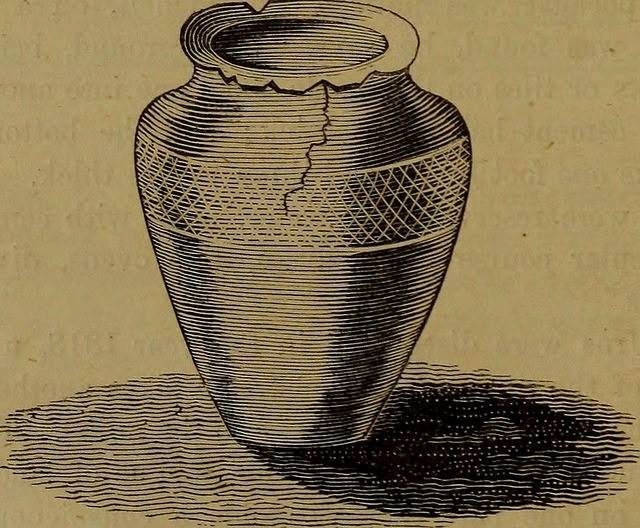
A story is told of an Eastern village that, through the centuries, was known for its exquisite pottery. Especially striking were its urns; high as tables, wide as chairs, they were admired throughout the country for their strong form and delicate beauty.

Legend has it that when each urn was apparently finished, there was one final step. The artist broke it – and then put it back together with gold filigree. An ordinary urn was thus transformed into a priceless work of art. What seemed finished wasn’t, until it was broken.

So it is with people. Broken by hardships, disappointments and tragedy, they can become discouraged and cynical. But lives can also be mended. Put back together well, they won’t be just like they were before. Damaged pieces reassembled with a golden bonding of patience and love will help form a person into an exquisite masterpiece. It is as if people have to be broken before they can become whole and complete.

If you feel broken remember this – you are a work of art. As a work of art, you may never be finished, but that is the process of a lifetime. And your very brokenness serves a purpose.

Remember this, too: Every time you decide to mend, you become a little more complete. And a little more beautiful.

And so, we pray: Lord, use my brokenness to help me be a more beautiful work of art for you and your work. Amen.

Grace and Peace
Steve