Words of Wisdom From Ole Festus

th

One grizzled westerner says, “Ain’t no horse can’t be rode; ain’t no cowboy can’t be throwed.” Problem is … some people seem to be riding most of the time while others sit in the dirt discouraged.

Why is that? Why do some people seem to have an easier go of it than others? Why do some people seem to find their place while others never quite “get it together”? And why do many average and ordinary people accomplish extraordinary, or at least notable, things while others expect that they will never really amount to much?

There is not a single quick and simple answer to these questions. But I have discovered that there is one factor that is crucial, one thing that plays an indispensable role in whether we will spend more time riding the horse or sitting in the dirt. This factor is more basic than raw talent or hard work. It is more fundamental than one’s background or intelligence. It has to do with the reasons why some people are able to compensate for poor backgrounds and others do not, why some intelligent people lead healthy and happy lives while other smart people flounder.

What is the one, single factor that makes the greatest difference whether one will lead the life they want or be disappointed again and again? In my experience, that factor is CONFIDENCE.

In his article How ‘Average’ People Excel (Reader’s Digest, 1992), Alan Loy McGinnis tells about how Thomas J. Watson, Jr. learned to make good things happen in his life. Watson’s father was founder and longtime head of IBM. But young Thomas was a lackluster student who even needed a tutor to get through the IBM sales school. He recalls that he had no distinctions and no successes.

Then he took flying lessons. What a feeling he experienced soaring above the clouds! He soon learned that he was good at flying – very good. He plowed everything into this “mad pursuit,” as he fondly called it, and gained self- confidence. From that point on, his life took a significant turn.

Watson became an officer in the US Air Force during WWII. Though not brilliant, he discovered that he had an orderly mind and an unusual ability to focus on what was important and to put it across to others. These were traits he would build on.

Watson went back to IBM. With his new-found confidence he eventually became chief executive of the corporation and took it into the computer age. In 15 years he increased IBM’s revenues almost tenfold.

Confidence is a life ingredient that is essential to success and wholeness. It is perhaps the single most important trait that enables seemingly average people to do and become all that they can. And the good news is – it can be learned. No one has to suffer a lifetime of low confidence.

Have you heard about the little boy sitting on the bench at his team’s baseball game? When asked by a concerned parent if he was discouraged that his team was behind 14 to nothing, he responded, “Discouraged? Why should I be discouraged? We haven’t been up to bat yet!”

With confidence like that, it was going to be an exciting game.

Grace and Peace
Steve

Our Brokenness Helps To Complete Us

Photo by Korhan Erdol on Pexels.com

Edward Fischer writes in Notre Dame Magazine (February, 1983), that a leper in Fiji (or, more correctly, a sufferer of Hansen’s Disease) followed the leading of his twisted hands. He became an internationally known artist. “My sickness I see as a gift of God leading me to my life’s work,” he said. “If it had not been for my sickness, none of these things would have happened.”

As a young girl, Jessamyn West had tuberculosis. She was so sick that she was sent away to die. During that time she developed her skill as a writer and authored numerous novels in her lifetime.

That great author Flannery O’Connor suffered various ailments – lupus struck her at 25 and she walked only with the aid of crutches for the final fourteen years of her life. She noted, however, that this illness narrowed her activities in such a way that she had time for the real work of her life, which was writing.

Some people succeed in spite of handicaps. Others succeed because of them. I am not telling you anything new when I say that our problems help to make us what we are. Those who suffer often learn the value of compassion. Those who struggle often learn perseverance. And those who fall down often teach others how to rise again. Our troubles can shape us in ways a carefree existence cannot.

A story is told of an Eastern village that, through the centuries, was known for its exquisite pottery. Especially striking were its urns; high as tables, wide as chairs, they were admired throughout the country for their strong form and delicate beauty.

Legend has it that when each urn was apparently finished, there was one final step. The artist broke it – and then put it back together with gold filigree. An ordinary urn was thus transformed into a priceless work of art. What seemed finished wasn’t, until it was broken.

So it is with people. Broken by hardships, disappointments and tragedy, they can become discouraged and cynical. But lives can also be mended. Put back together well, they won’t be just like they were before. Damaged pieces reassembled with a golden bonding of patience and love will help form a person into an exquisite masterpiece. It is as if people have to be broken before they can become whole and complete.

If you feel broken remember this – you are a work of art. As a work of art, you may never be finished, but that is the process of a lifetime. And your very brokenness serves a purpose.

Remember this, too: Every time you decide to mend, you become a little more complete. And a little more beautiful.

Grace and Peace
Steve

I Hope You Will Take a Look At My New Book “Phoenix Rises Again” Just click on the title in the upper right column of the blog page. If you are viewing this from the email click on my name at the top and it will take you to the blog page

If you like what you read here ask your friends to sign up for an email notification by entering their email address in the “Follow” section at the bottom left of the blog page

Find Many Reasons to Laugh Everyday

Photo by Henley Design Studio on Pexels.com

I read that a child laughs 400 times a day on the average, while an adult laughs only 15 times. Which puzzles me – what do you think the children are laughing at?

During one particularly dark period of my life I didn’t laugh even 15 times a day. Not nearly. For a variety of reasons, ranging from anxiety in my personal life to overwork and exhaustion, I was depressed. I may not yet have recognized it as depression (later I did), but now I can see that the signs were there.

My self-loathing surfaced once when I found myself driving alone on a cold Spring afternoon to spend a couple of days with colleagues on a work-related planning session. “I don’t have time for this!” I said out loud, and berated myself for not saying no. I was leaving my spouse to contend with children by herself while my daily work piled up in my absence. I felt submerged by an ocean of problems, professional and personal, with no chance of finding any way out. Everything looked bleak.

I met my colleagues for supper the first evening. To my surprise, we sat around the dinner table telling funny stories. We related real-life incidents that had happened to each of us. I had to admit, even in my despondency, that it was good to laugh. And those turned out to be some of the funniest stories I had ever heard! My anxiety melted as I relaxed and I found myself laughing hard – harder than I’d laughed for years.

The next day we worked, but we also played. We invented games using whatever recreational equipment we could lay our hands on. The sheer fun of playing, something else I hadn’t done for far too long, awakened something within me I thought I might never feel again.

The following day I returned home and I felt better than I had in months. Though it eventually took a lifestyle change to lift the depression for good, laughter became a key ingredient of that change. I determined then and there that a therapy of laughter would become a permanent part of my life. I’ve held to it, and have found that regular and hearty laughter is essential if I want to maintain inner peace and good health.

I had discovered a great truth about laughter – it is good for the body, the mind and the spirit. It’s a natural stress reliever. Have you ever laughed so hard that you doubled over, fell off your chair, spit out your food or wet your pants? (Yes, I’m not proud to say, I have.) You just cannot maintain muscle tension when you are laughing.

Author Norman Cousins used to say that laughter is so beneficial for your body that it is like “inner jogging.” Numerous studies have shown that laughter is good for your heart, it boosts your immune system and promotes overall good health.

The good news is that you are not limited to 15 laughs a day. You’re allowed hundreds of laughs. What might happen if you doubled the usual adult rate and tried to laugh 30 times today? Can you do it? You’ll probably notice an immediate difference in how you feel.

Then try to laugh 50 times a day. By this time you will begin to notice an improvement in your relationships.

But don’t stop there. What if you could find 100 reasons to laugh every day? You can do it by surrounding yourself with people you feel good around, looking for humor in daily life, taking a minute to remember what’s funny and even keeping a journal of whatever makes you happy.

Find 100 reasons to laugh. You are bound to feel better, you will cope with problems more effectively and people will enjoy being around you.

Besides unhappiness, what do you have to lose?

Grace and Peace
Steve

They Are ALL Our Children

Photo by Pixabay on Pexels.com

The reporter was amazed. He looked at the grieving man and said, “I thought she was YOUR child.”

The man replied, “No, but aren’t they all our children?”

“Hurry, my friend,” the man urged, “my child is still alive.” A moment or two later he pleaded, “Hurry, my friend, my child is still breathing.” A little later he said, “Hurry, my friend, my child is still warm.”

When they got to the hospital, the young girl was gone. “This is a terrible task for me,” the distraught man said to the reporter. “I must go tell her father that his child is dead. He will be heartbroken.”

I think that is one of the great questions of our age. Aren’t they all our children? It is a question that deserves an answer.

Aren’t they all our children? Those who live under our roof and those who reside with another family? Those to whom we are related as well as those whom we have never known?

Aren’t they all our children? Those on our side of the border as well as those on the other side? Those of our nation no more or less than those of another?

Aren’t they all our children? Those who worship like us and those who worship differently? Those who look like us and those who do not?

Aren’t they all our children? The well-educated and the under-educated? The well-fed and the under-fed? Those who are secure and those who are at risk?

Aren’t they all our children? The highly valued and highly esteemed as well as the castaways and the lost?

Aren’t they all our children? Aren’t they all our responsibility? ALL of them? Ours to nurture? Ours to protect. Ours to love.

I don’t think it is an exaggeration to say that the survival of our world hinges on the answer to that question.

To say they are NOT all our children is to condemn the world to more struggle – family against family, group against group, nation against nation.

Aren’t they all our children? If we say yes, can we ever again pit them against each other? “If we have no peace,” said Mother Teresa, “it is because we have forgotten that we belong to each other.”

Aren’t they all our children?

There may be no greater question for our generation. And how we answer that question will determine the shape of our world for years to come.

Grace and Peace

Steve

HOPE YOU WILL SHARE MY NEW BOOK (top right on blog page)

Ruffled Feathers

ruffled feathers

You know that it is easy to be an angel when nobody ruffles your feathers. But it seems that feather rufflers will always be around.

We’re told that 19th Century German statesman Prince Otto von Bismarck’s feathers were so ruffled by the criticism of a professor acquaintance of his, that he challenged the man to a duel. Protocol had it that the one challenged was to choose which kind of weapon was to be used in the duel.

The professor made a thoughtful choice… he proposed they duel with sausages. He sent word to Bismarck, along with a pair of sausages, that one sausage was safe to eat. The other had been poisoned with trichinae, which would cause a slow and lingering death, or at least long invalidism. He informed the prince that he should pick which sausage to eat and said he’d eat the other one.

Bismarck reasoned that a man might die with some sort of honor on a dueling field, but never by food poisoning. He sent the message back, “His Highness has destroyed the sausages and asks that you be his guest at dinner this evening. After due consideration he feels he may have been slightly in error. He believes an agreement can be reached.”

It’s said that one of the most important trips a person ever takes is “to meet someone halfway.” Bismarck met his adversary halfway and neither man was poisoned that day.

When others ruffle our feathers, we always have a choice. We can meet them on the equivalent of a dueling field and slug it out with words, or worse. But escalating conflict almost always means there will be a winner and a loser.

Or we can take that trip to meet them halfway and iron out a compromise. It is rarely an easy trip to make, but it’s worth it once we get there. And who knows, we might even find a solution to the conflict where both sides feel they are coming out ahead.

It’s your choice. And the choice you make will make all the difference.

Grace and Peace

Steve


A Real Apology Takes Action

cat LOL

Listen to this letter of apology:

  “Dear Dog,
I am so sorry about you being sent to the dog pound for the broken lamp which you did not break; the fish you did not spill; and the carpet that you did not wet; or the wall that you did not dirty with red paint…

  Things here at the house are calmer now, and just to show you that I have no hard feelings towards you, I am sending you a picture, so you will always remember me.

  Best regards,
The Cat”

The Old French root of the word “repent” is “repentir,” which actually means to be sorry. The cat may have said he was sorry, but there is no sorrow here.

It reminds of me of the story of a woman with fourteen children, ages one through fourteen, who decided to sue her husband for divorce on grounds of desertion. “When did he desert you?” the judge asked. “Thirteen years ago,” she replied. “He left 13 years ago. Where did all the children come from?” The woman looked sheepish. “He kept coming back to say he was sorry.”

Again, no sorrow here, for if he’d been truly sorry, he would have stayed. Sincere repentance always leads to change. I know a story where a man wrecked his daughters’ car and said: “It’s my fault, I’ll help make up for what I did.” But he never did anything. There was no real apology… only words.

We need to learn how to make a GOOD APOLOGY — one that is sincere and honest. One that gets the job done. Offering a good apology is not something many people do well. But we can learn.

It is well said that a good apology has three parts: I am sorry; it is my fault; what can I do to make it right?

I am sorry. Three short words that, when they are heart-felt, can be most difficult to say. But when uttered, they can change lives.

It is my fault. No excuses. No blame. Psychologist Carl Jung insightfully said, “The only person I cannot help is one who blames others.” When we accept fault, we have the power to do something about it. When we pass the blame, we are helpless to keep it from happening again.

What can I do to make it right? Unless we change something, nothing changes. A good apology is followed by action. Otherwise, it is only words.

If you are going to apologize, apologize well. Never ruin your apology with an excuse and back it up with action.

Learning how to make a good apology is too important to neglect. It’s part of maintaining whole and healthy relationships. And it’s something we can practice today.

Grace and Peace
Steve

NEW BOOK ON THE MARKET

Hi Guys,

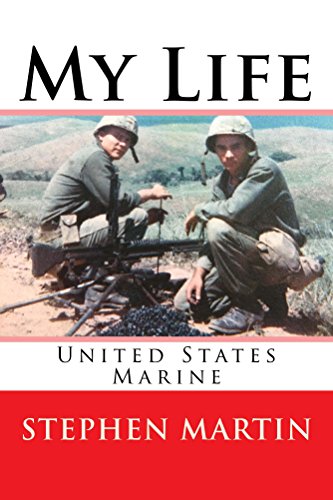
Just in case you have heard about it… I wanted to share the news with you. The wild look guy on the right has just published a revised book (on the left) about some of what happen with the old Phoenix Project of the Vietnam 60’s rising from the ashes in today’s world. All of this is fiction, but not unrealistic in the crazy world we live in today. It is set in 2024 but I hope it never happens even in 3024.

You can purchase this book from amazon simply by clicking on it’s image on the right of your screen (if you have gone to my blog page). If not there just type in the title in amazon’s search bar. I really appreciate your support in this endeavor.

It is just an ordinary book, using ordinary language, telling a simple story of intrigue, courage and betrayal. By the way, your kids and grandkids can read it. No language used that is inappropriate for them to read. I didn’t want my grandkids asking me why I used foul language in my book.

I had to stay true to my inner self.

Thanks
Steve


The Important Things

handwritten dark writing school

Photo by cottonbro on Pexels.com

I recently read the story of someone where one of his best friends had been killed in a private plane crash. Something happened at the memorial service that he’ll never forget: At the memorial service, his friend’s wife walked to the podium to speak to the gathering. She said a friend had asked her the best memory she had of their life together. At the moment, she had been too grief-stricken to answer, but she thought about it since and wanted to answer the question.

They were in their late forties when he died, and she began talking about a time in their lives almost twenty years earlier. She had quit her job to obtain her master’s degree, and her husband never wavered in his support. He held down his own job and also did the cooking, cleaning, and other household chores while she studied for her degree. One time, they both stayed up all night. She was finishing her thesis and he was preparing for an important business meeting. That morning, she walked out on their loft, looked at him over the railing, and just thought about how much she loved him. She knew how important this meeting was to his career, and she was feeling guilty that she didn’t even have time to make his breakfast. He grabbed his briefcase and hurried out. She heard the garage door open and close, but much to her surprise, she heard it open again about thirty seconds later. From above, she watched her husband dash into the house and walk over to the neglected coffee table. Tracing his finger through the dust, he wrote the words “I love you.” Then he raced back to his car.

The new widow then looked out at her audience and said, “John and I had a wonderful life together. We have been around the world several times; we’ve had everything money can buy…but nothing comes close to that moment.” Our lives move with lightning speed. It feels like yesterday that I graduated from college…and now forty years have passed. Although I’m very proud of my business accomplishments, in the end, my life comes back to loving and being loved.

This story about a husband’s random act of love always reminds me that the smallest things can make the biggest difference to those around you. It reminds me to do little things for the people I love to show them how much they mean to me. I pray I always remember this story enough to remind me to do those little things with my family and friends. I hope this story also inspires you to love and be loved.

Grace and Peace
Steve

Hope you will take a look at my new (revised) book

just published on Amazon (July 4, 2021)

“Phoenix Rises Again.”

What do we do now?

https://s315.podbean.com/pb/ca7b1db7a91d2ed753d2e57ba5eafef3/60e4b6ef/data3/fs5/5314698/uploads/Randysquare.jpg?pbss=efa0d32c-783b-51c6-b4ea-c04e0ad14b18

I invite you to listen to my favorite preacher… July 4th sermon from Washington National Cathedral in Washing DC… The people’s church.

https://www.podbean.com/ew/pb-wu59c-1080d2c

My Last Two Uncles

24AAA4D2-663F-4807-8353-563482A10E74

Joe & Guthrie

These two men were the coolest dudes when I was growing up… Joe, on the left, was the youngest of my uncles on the Melvin side.  WG Brown became my uncle when he married Joe’s sister. This picture was taken while both of them were in the Army at the time. Joe stayed in the Army… fighting in Korea and Vietnam. Matter of fact he volunteered to go back to Vietnam SIX times. I have never known anyone who was so gung ho. It was not that he loved war, just that he seemed to be energized by living on the edge war provided. He was an outstanding soldier. Congressman, Howard Coble, presented Joe with 55 medals from his time in service. He is now in the VA home in Asheville waiting for room at a VA facility nearer to Greensboro.

Guthrie Brown was just cool. When I was a young child Guthrie started work as a Park Ranger at Guilford Memorial Park. I always looked at him with great respect, especially because I thought he worked with Smokey the Bear… and to me that was a big, big deal. But as I grew I found there was much more to him than his famed friend.

WG, as he was known, was one of the biggest NASCAR fans around. Back in that day you pulled for the car. The big adversaries were Ford, Chevy, and Plymouth. WG was a FORD fan. Some would pick on him saying that FORD meant Fix Or Repair Daily. His come back was always First On Race Day.

He was a good man, cigar and all. He was always true to his word… one of those you can always count on, my kind of guy. When I was 16, I asked my Aunt Betty if I could borrow their car for a job interview. WG’s car was his baby… and you didn’t mess with his baby. I was very, very careful to drive safely and stay out of everyone’s way. His car was a gold colored Ford Galaxy… I mean… top of the line… sweet, cool ride. To be any cooler you would have to drive a T-Bird convertible.

He was our family’s James Dean or Steve McQueen. He didn’t try to be like them… he was just cool. Well, Guthrie stepped through Heaven’s Gate on Saturday, July 3rd, 2021. He was in his 90’s and it was just more difficult to struggle through… He was a good Christian man who made it to the finish line. I don’t know if he saw a checkered flag or not, but I am sure he saw Aunt Betty and felt the loving arms of God. Guthrie, you made it all the way… the car may have been a little wobbly and the ride unsteady… but you were welcomed at the finish line with a “Well done, my son, well done”.

We all will miss this man, his manner, his laugh, his smile, and a man who was as real and honest as they come.

I still think he worked with Smoky the Bear.

Grace and Peace
Steve