We Need a Best Friend

Former prisoner James Knapp confessed to police that he’d robbed two stores in Oklahoma (USA), because he missed his old cell mates. Police said they’d see if James could be reunited with his buddies.

But I think Mr. Knapp might have said something worth listening to. We need friends, no matter where we find them.

And do you know who your best friend is? Automaker Henry Ford was having lunch with a man, when he suddenly asked the man that very question. “Who is your best friend?” Ford asked.

The man hesitated and Ford went on. “I’ll tell you who your best friend is,” he said. Then he wrote this sentence for the man to read: “Your best friend is he who brings out the best that is within you.” Our best friends are those who do more than simply like us. They also believe in us. They support us but, occasionally, they nudge us as well.

Someone put it well: “A friend is someone who knows you as you are, understands where you’ve been, accepts who you’ve become, and still, gently invites you to grow.

“Now…who is your best friend?

And so, we pray: O Lord, the world can be so lonely at times. Many of us grow up without that special life-long friend to help us through life. Help us all to find someone who understands, accepts us, and still remains our friend. Amen.

Grace and Peace
Steve

Doing the Unexpected

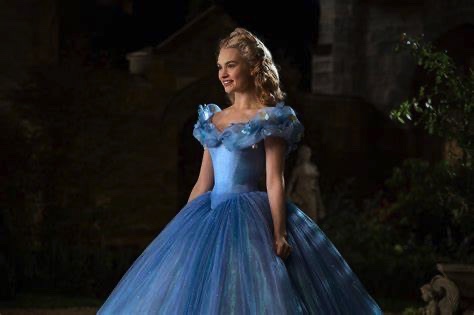
Something magical once really happened in Cinderella’s Castle in Florida’s Disney World. Children and parents were crowded into a room waiting for Cinderella’s appearance. She made a dramatic entrance and the children clamored around her.

Whoever hired the young woman to play the role of Cinderella found a remarkable match. She was perfect. Flawless skin; beautiful face; bright eyes and smile; and, she was costumed exquisitely. She looked as if the cartoon character had come to life.

The children wanted to touch her and have her wave her wand over their heads. She smiled down at them and the room was electric with excitement.

Electric for everyone except two boys, apparently brothers, who stood next to a far wall, away from the other children. The older boy held the hand of the younger, much smaller boy, whose body and face were disfigured.

The look in the young boy’s eyes was that of yearning. How he wanted to be with Cinderella. How he wanted to be a part of the other children. But he held back, probably out of fear. He had likely been hurt too many times before by children who didn’t understand.

But unexpectedly, Cinderella turned and saw the boys. And she must have noticed the longing in the little one’s face, for she slowly made her way through the throng, inching toward the far wall.

Then something magical happened. Cinderella did the most remarkable thing — something I’m sure she never learned in Cinderella Training Class. She bent down and kissed the little boy’s face. He smiled a big and beautiful smile. Cinderella kissed him!

Could anything be so wonderful? Cinderella kissed him. Out of all of the children in that room, Cinderella kissed him. No matter what happens to him, he’ll always have that — Cinderella kissed him.

And when he looks into the mirror he will always see the face that Cinderella kissed looking back. Who knows… for months, for years, maybe forever stings and barbs of life will hurt a little less. And he will stand a bit taller and feel a little more special. He’ll never forget that… something magical happened… the day Cinderella kissed him.

And so, we pray: O Lord, help us be like Cinderella and kiss the wounds and hurts of the world that all who are wounded and hurting will hurt a little less. Amen.

Grace and Peace
Steve

I Have a Dream

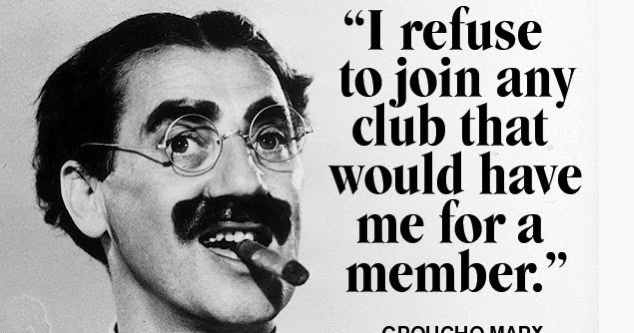
The daughter of comedian Groucho Marx was once denied admittance to an exclusive country club swimming pool with her friends because she and her family were not members. Realizing what had happened, embarrassed officials sent the Marx family an apology and an application to join. Groucho declined the invitation with the comment, “I wouldn’t want to belong to any club that would have me as a member.”

Someone still tried to smooth over the incident by persuading the comedian to allow an application to be submitted for membership. The country club was embarrassed further when the application was denied. The reason? The Marx family was Jewish and the club was “restricted.”

True to form, Groucho wrote back: “My wife is not Jewish. Can she go swimming and let our daughter wade up to her waist?”

I love his use of humor, but Groucho effectively shines a spotlight on the prevalence and absurdity of prejudice. He must have felt, as did Sir Isaac Newton so many years earlier, that we “build too many walls and not enough bridges.”

I yearn for a time when we courageously break down those walls that divide and build wide bridges between one another. I long for a super-highway of compassion and acceptance spanning our differences that will unite us as one. I dream of an age when people will finally be connected heart to heart and mind to mind.

My greatest desire is that we somehow learn what it means to be family.

And so, we pray: O Lord, so many times we don’t act like a family, or even friends. We are so preoccupied with our little space, our little project, our little beliefs and agendas that we build walls to keep other people out of our territory. Help us to learn to build bridges that would help to unite all your children on this earth. Amen.

Grace and Peace
Steve


How Big is Your God

I enjoy a story about baseball great Joe Garagiola. He once stepped to the plate when his turn came to bat. Before assuming his stance, however, fervent Roman Catholic Joe took his bat and made the sign of the cross in the dirt in front of home plate. Catcher Yogi Berra, also a devout Catholic, walked over and erased Garagiola’s cross. Turning to the astonished batter, Berra smiled and said, “Let’s let God watch this inning.”

If I were God (and thank goodness I’m not), I think I would have wanted to simply watch the inning.

I likewise appreciate the story about an old Quaker who stood during the church meeting and told his fellow Friends about a young man who was not a Quaker and who lived an undisciplined life. This young man invited a pious Quaker friend to go sailing one day. A sudden storm came up and the wild young man was drowned. Having made his point, the old Quaker sat down.

Silence returned to the meeting until the old man once again arose. This time he said, “Friends, for the honor of the truth, I think I ought to add that the Quaker also drowned.”

And if I were God (and again, thank goodness I’m not), I think I would have felt sadness for both losses. Neither was a greater tragedy than the other.

I know that religious piety can be a wondrous and beautiful thing. But it disturbs me the prominent role religions have historically played in wars and brutality over the ages. If I imagine a god so small as to favor those who think like me, worship like me and act like me, then I know very little of life and less of faith. I can’t help but think this world would be in better shape if the gods many of us believed in were a little bigger.

And so, we pray: O Lord, so many times I have thought of you as being so small as to concentrate on those who believe like me… when all along the Bible even says there are many points into heaven. Help widen my world view that I can actually see all the people of the world as your children. Amen.


Grace and Peace
Steve

Use it Generously

A well-known surgeon was attending a dinner party and watched the host adroitly carve and slice the large turkey for his guests.

When he finished slicing, the host asked, “How did I do, Doc?  I think I’d make a pretty good surgeon, don’t you?”

“Perhaps,” said the physician. “But anyone can take them apart. Now let’s see you put it back together again.”

Like surgery, some tasks require special talent, skill or training. There are those who have what it takes to work in an operating room. Others have the kind of aptitude needed to teach a class or repair an automobile, and still others can cook a delicious meal, play a musical instrument well enough that folks want to listen or solve difficult mathematical problems. Some people have a natural ability to relate to others, some people are imaginative problem-solvers, some people can organize almost anything and others possess the gift of empathy. I have yet to meet anyone who does not exhibit a unique talent or ability.

But Spanish cellist Pablo Casals said it well: “Don’t be vain because you happen to have talent. You are not responsible for that; it was not of your doing. What you do with your talent is what matters.”

And what’s the best thing to do with talent and ability? Use it. Use it generously – even extravagantly. And use it for good.

Erma Bombeck was known for her humorous journalism. But she frequently seasoned her writing with pinches of wisdom. At the end of a newspaper column on March 10, 1987, Bombeck wrote these words:

I always had a dream that when I am asked to give an accounting of my life to a higher court, it will go like this: “So, empty your pockets. What have you got left of your life? Any dreams that were unfulfilled? Any unused talent that we gave you when you were born that you still have left? Any unsaid compliments or bits of love that you haven’t spread around? “And I will answer, “I’ve nothing to return. I spent everything you gave me. I’m as naked as the day I was born.”

 She would agree that what we do with what we’re given is what matters.

My question is this: what would you find if you emptied your pockets today? Any unused talent? Is there anything inside that should be spent, shared or given away? When it comes to your time and resources are you living a life of extravagant generosity?

I’m going to mentally empty my pockets tonight at bedtime and see if I’ve been holding back. I think that’s important. I want to make sure there is nothing left at the end of the day that could have been used. And then tomorrow I’ll see what I can use up.

I can hardly think of a more worthwhile and joyous way to live.

And so, we pray: Lord, I look hard to find a talent… whatever it is help me to find it and use it all up sharing your love, mercy and grace with your children everywhere. Amen.

Grace and Peace
Steve

The Feeling May Become Permanent

Newscaster Paul Harvey once told about a woman who called the Butterball Turkey Company and said that she had a turkey that had been in her freezer for 23 years. She asked if it was still any good. She was told that if her freezer was at least zero degrees Fahrenheit, then the turkey was probably safe enough to eat. But they wouldn’t recommend that she eat it. The flavor would have deteriorated considerably. She said, “That’s what we thought. I guess we’ll just give it to the church.”

I suppose there are many reasons we choose to give. But people who enjoy sharing with others the most do not share simply because they have a need to get rid of something. Those who find the greatest joy from giving have learned to give from a deeper place; they give from their hearts. 

Santa Claus is becoming a universal symbol of giving. Millions of children write letters to Santa each year in hopes that they won’t be forgotten during his annual giving spree. Did you know that the US Post Office actually found ways to answer those letters to Santa Claus? They used to just stick them in the so-called dead letter box. But now some cities have programs that allow people to sort through these hand-written pleas, hopes and wishes and become “Santas” to others in need. They choose a letter and respond however they can. Most anyone can play Santa.

One letter that might have been discarded a few years ago, but was picked up by a volunteer Santa Claus, came from a boy named Donny. He wrote that he wanted a bike for Christmas and “some food and what I really need is love.”

Another volunteer Santa latched onto a letter from a young mother who wrote, “I lost my job…and I cannot afford to give my two children the things they need for the winter months.” That generous spirit helped with some necessities for the children.

“I like to go to their home on Christmas Eve,” one joyful Santa said. One year he bought presents for four children and a ham for their mother. Then he added this poignant observation: “The feeling you get is just incredible.”

I admit it – I don’t always get that feeling when I give. But then I don’t always give out of untainted motivations. Sometimes I give from other places. Sometimes I give out of social obligation or out of guilt. Or I give with an expectation for receiving back. But I give best when I give from that deeper place; when I give simply, freely and generously, and sometimes for no particular reason. I give best when I give from my heart.

And isn’t it true? Opportunities to give from the heart are not limited to a particular holiday season or cultural tradition. Whether we give food, money, an hour of time or a hug, we can give it sincerely and joyously.

But let me offer a word of caution. If you choose to give from your heart, be careful. The most incredible feeling might just overwhelm you. And if you continue in this behavior, that feeling may become permanent.

And so, we pray: Lord, help me to give from the heart so much that it becomes a permanent part of my life. Amen.

Grace and Peace
Steve

Having a Beautiful Heart

One grandfather quipped about his grandchildren: “My grandkids are four and six. The Pulitzer Prize winner is four and the brain surgeon is six.”

Parents and grandparents are understandably proud of the quick minds and impressive talents of their little ones. But let me tell you about another quality, perhaps even more important. A grandmother wrote to me and told me this story about her four-year-old granddaughter Skylar. 

It was Christmastime. Skylar had saved coins in a piggy bank all year and decided to buy presents for her family with her savings. But she also learned from announcements on television about a local homeless shelter called “The Road House.” She repeatedly asked her mother what “homeless” meant and why those children needed coats and warm clothes. The concept of people in such physical need deeply affected her.

Skylar’s mother took her to the store to buy Christmas presents. But instead of buying for herself or her family, she decided to use her savings for somebody at the shelter. They learned that there was a little girl staying there about Skylar’s age, and she purchased a warm coat, socks, gloves and crayons for the child. She also wanted to buy her a doll (a “baby,” as she called it), but when she discovered she didn’t have enough money, she left the doll behind. When Skylar got home, she selected one of her own much-loved dolls to give away. The baby went into a box with the other items.

She could hardly wait for Christmas. Skylar was not thinking about Santa Claus or any presents she might be getting. She was thinking only about going to the shelter and giving her carefully selected gifts to a little girl she had never met.

On Christmas Eve she and her family finally made the trip Skylar had been anticipating for so long. They drove to the shelter. There she presented her Christmas box to a grateful child. She was so filled with joy at truly touching someone else’s life that her family decided to make the journey to the shelter an annual tradition.

“Perhaps it’s good to have a beautiful mind, but an even greater gift is to have a beautiful heart,” says Nobel Laureate John Nash (“A Beautiful Mind”). He would have appreciated young Skylar’s heart.

Beautiful hearts don’t just happen. Nash calls it a gift, but it’s a gift in the way that faith or hope or love are gifts. And I’m convinced we have each been endowed with a beautiful heart. We may not always see it. We may not even believe it. But it’s a gift that came with birth and, every time we act selflessly, it grows a little.

And so, we pray: Lord, I have been blessed in so many ways through my life… parents, wife, child, grandchildren and all the folks in the churches I have served. Everywhere I have been I have witnessed people with beautiful hearts who go out of their way to give to uplift others. Help me too also have a beautiful heart. Amen.

Grace and Peace
Steve

Invest That Dime

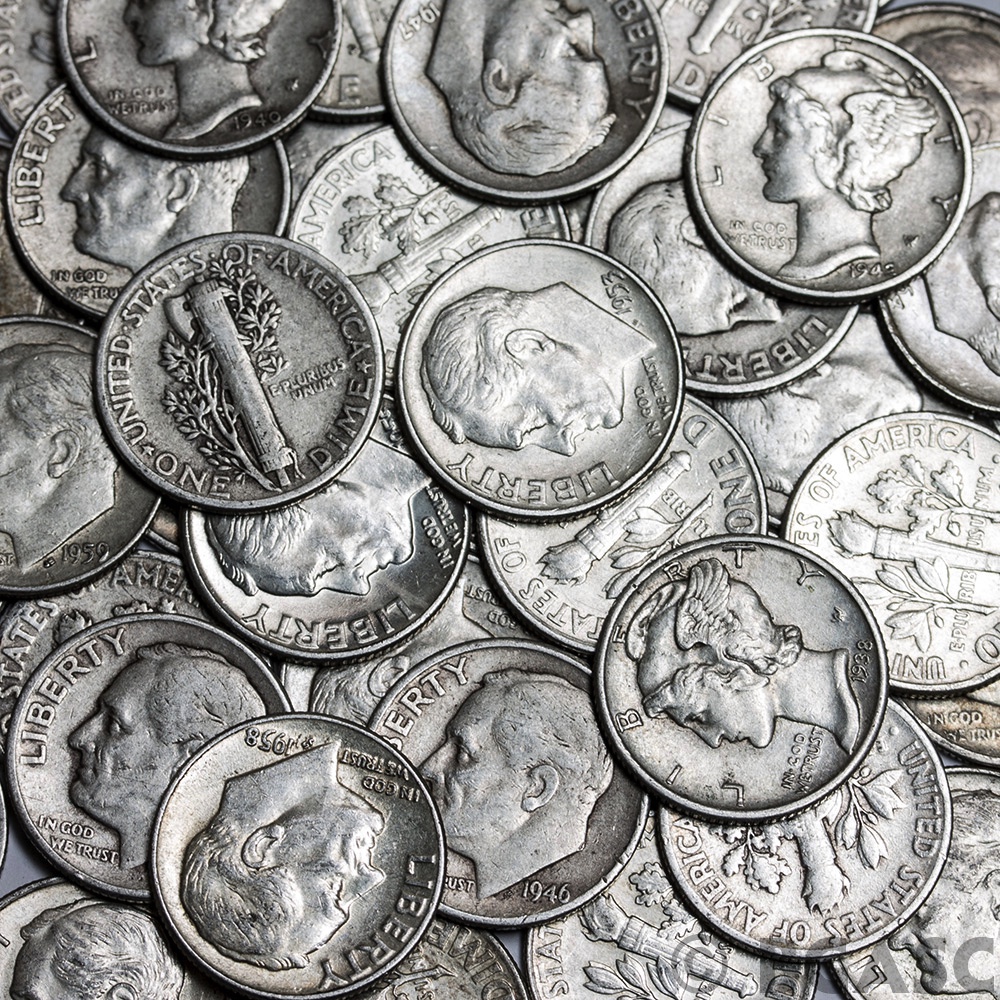
Can one dime make a difference? Here is a woman who turned a dime into millions of dollars. 

Her name was Martha Berry. This clever woman founded the Berry School in Rome, Georgia. She scraped together funds from every source possible. One day she approached Henry Ford, of Ford automobile fame, and asked for a contribution. Patronizingly, he reached into his pocket and pulled out a dime.

Rather than be insulted or discouraged by the “gift,” Miss Berry bought a package of seed peanuts with it. The seeds were planted and tended, and they eventually yielded a large crop, which she later sold.

Again she called on Mr. Ford. “Here’s the dime you gave me last year,” she said, handing him a coin. Then she told him of the return she had realized from his token investment.

Ford was so impressed that, in the years to come, he gave millions of dollars to the school.

Can one dime make a difference? Yes, if it is well invested.

How about one hour of your time? Can it make a difference? Or how about the life of one person? Can a life like yours or mine really make a difference? The answer to each of these questions is the same: Yes, if it is well invested.

Now…how are your investments doing?

And so, we pray: Lord, help us to take the little gift given, invest it, tend it, care for it till it produces a great harvest for you and others. Help us to make a difference with what we are given. Amen.

Grace and Peace
Steve

Take Me As I Am

On her 50th wedding anniversary, a woman revealed the secret of her long and happy marriage. She said, “On my wedding day, I decided to make a list of ten of my husband’s faults which, for the sake of the marriage, I would overlook.”

One of her guests asked her what some of the faults she chose to overlook were. “To tell you the truth,” she replied, “I never did get around to making that list. But whenever my husband did something that made me hopping mad, I would say to myself, ‘Lucky for him that’s one of the ten!’”

It’s nice to decide what to overlook. In relationships, I get plenty of practice overlooking the foibles of other people. And I suspect they get plenty of practice with me, too.

As they hung wallpaper together, one husband became frustrated with his wife. She seemed, to him, to be indifferent about the quality of her work. He felt she was doing a poor job. He finally put it into words this way: “The problem is that I’m a perfectionist and you’re not.”   

“Exactly!” she replied. “That’s why you married me and I married you!”

Miss Perfect certainly did one thing well. She knew how to overlook annoying observations from her perfectionist husband.

We human beings are nothing if not flawed and imperfect. But, the point is, people are not meant to be without blemish. We’re scraped and scarred, flawed on the inside and marred on outside. It’s just the way we are. (Sometimes I think it’s one of our more endearing qualities.) I never want to forget that “perfect” is only found in the dictionary.   

Even pottery may be closer to perfection than we humans, if Belleek Pottery in Ireland is any example. I hear that every finished piece there undergoes a final inspection. It is held up to a fierce, bright light and examined for imperfections.  If even the slightest flaw is detected, the cup or plate or vase or sugar bowl is smashed to pieces. That’s right. The blemished piece is never sold as a “second.” If Belleek pottery is not flawless, it is reckoned to be no good at all. No doubt other makers of fine china and crystal operate the same way. 

I surely cannot stand up to that kind of scrutiny. I have flaws I haven’t even begun to explore yet. 

How much pain prompted the words of that sensitive artist Vincent van Gogh when he lamented, “I wish they would only take me as I am.” How many times a day are those words repeated by countless people feeling the sting of rejection? To be accepted as one is and not discarded as useless is more than just a wish; it is a deep, human need. 

All of us sport an invisible sign around our necks — “AS IS.” It means, take me as I am. I may not become what you want me to be. And I’m far, far from perfect. But I have some great qualities, too, as well as my share of faults. You will have to take me “AS IS” and I’ll take you that way, too. 

AS IS will be the best guarantee any of us can offer. But quite frankly, most of the time we’re getting a pretty good deal.

And so, we pray: Lord, I fell in love with a hymn sang by the Myers Park UMC choir several years ago: “Take, O Take Me As I Am.” Tears came to my eyes as I was so beautifully reminded of that is how Jesus takes us… and loves us anyway. Lord, that is mercy beyond measure. Thank you for your mercy and grace and help me to seek to do the same with all my brothers and sisters. Amen.

Grace and Peace
Steve

What Day is It???

I don’t know about you, but I don’t spend a great deal of time worrying about how I appear to other people. I know I’m not perfect. Far from it. But I figure that there is an upside to my own flaws, faults and imperfections: for one thing, they seem to bring joy to others. Maybe that’s reason enough not to over-polish.

Or maybe it’s just that I underestimate the seriousness of my own shortcomings. I might be like the man who was driving a car with a bumper sticker that read, “Hang up and drive.” A police officer was pleased to spot the sticker, as she had witnessed too many accidents caused by motorists talking on cell phones. Wanting to signal her approval to the driver, she pulled up alongside the car. But when she glanced over, she was dismayed to see him peering into his rear-view mirror and shaving. 

At least he wasn’t talking on his mobile phone. 

Maybe it is just easier to spot the flaws in others. It’s like the camel. An African proverb states, “The camel never sees its own hump, but that of its brother is always before its eyes.” I probably don’t see my own humps very clearly. Or, as writer Margaret Halsey once said, “Whenever I dwell for any length of time on my own shortcomings, they gradually begin to seem mild, harmless, rather engaging little things, not at all like the staring defects in other people’s characters.”

So I can appreciate the story of an elderly couple who, while on an automobile trip, stopped at a roadside restaurant for lunch. The woman left her eye glasses on the table, but didn’t miss them until they were back on the highway. And, of course, it was difficult to turn around by then. Her husband fussed and complained all the way back to the restaurant about her “always leaving her glasses” behind. They finally arrived, and as the woman got out of the car to retrieve her glasses, the old man said, “While you’re in there, you may as well get my hat, too.” 

Psychologist Carl Jung puts a powerful spin on this phenomenon of seeing other’s faults more clearly than our own. He teaches that “everything that irritates us about others can lead us to an understanding of ourselves.” Or, put another way, the humps we can’t help but seeing in others are a lot like the humps others see in us. Or, perhaps they are like the humps we see in ourselves.

So, what would happen if we’d look at other people’s faults and humps as a gift? After all, they’re teaching us about ourselves. 

And that’s what makes us different from camels.

And so, we pray: Lord, there are so many camels surrounding me with great big humps… especially on Wednesdays. I wonder what humps they are seeing in me? Help me to see my own faults and failures before I see them in others. Help me to forgive first… before I even think to point a finger at someone else. Amen.