Trying to find the Right Words

Have you ever noticed how hard it can be to find the right words? This past week as I stood at the bedside of a special friend who had suffered a very severe heart attack. He was only 59 years old. As I gathered the family for prayer… I don’t know why, but I started the prayer with the words: “Lord, we are all at a lost for words.” It wasn’t intentional. It was just what I was feeling at that moment… there were no words.

It was once said that Al Smith, former governor of New York, was making his first inspection of Sing Sing prison. The warden asked him if he might say a few words to the prisoners. 

The governor began, “My fellow citizens.” But he suddenly felt confused about whether the inmates may have forfeited their citizenship. So he took a second stab at it: “My fellow convicts.” There was a roar of laughter and now he became flustered. He gallantly tried a third time: “Well, anyhow, I’m glad to see so many of you here.” There is no record of what he said after that.

I have frequently struggled to find the right words. And there are times I am certain the right words do not even exist. Like when I’m trying to say something hopeful or comforting in a particularly frightening situation.

More than once I have been called to a hospital emergency room or to be with a family surrounding the bed of a dying relative. And more than once I’ve been at a loss for words. What is the right thing to say at a time like that? What can I say that doesn’t sound hollow or trite or like I’m just not in touch with the feelings of others who are hurting? 

A lot of us really don’t know what to say at these times. And too often the professionals who work daily with people on the ragged edge of hope have become so desensitized they have lost any ability to comfort.

A wise obstetrician at a university teaching hospital once made a comment about comforting those who suffer. Someone asked the doctor what advice he offered his students, future doctors and nurses, when caring for mothers who gave birth to stillborn infants.

The doctor paused for a moment in thought. Then he said this: “I tell them that they need two eyes. One eye is not enough; they need two eyes. With one eye they have to check the I.V. And with the other eye they have to weep. That’s what I tell them,” he said. “I tell them that they need two eyes.”

That may be some of the wisest advice I’ve ever heard. We may not always need to figure out what to say; we really only need two eyes. In Emily Dickinson’s words, “Saying nothing… sometimes says the most.” And this from a poet whose life was all about finding exactly the right words.

I agree with the doctor – empathy goes a long way. And somehow finding the ability to feel, even for a few moments, what another is feeling may speak more loudly than the best words I can choose. It speaks to the fact that I care; I understand. It says that I am willing to share their pain so they do not feel so alone. It says I want to be fully present with them and to walk alongside of them, difficult as it may be. My presence is something they can draw real strength and hope from.

Come to think of it, maybe Dickinson did get it right: saying nothing… sometimes says the most. And saying nothing at all may be saying just the right words.

Grace and Peace
Steve

Zeke, my friend, Rest In Peace in the Father’s arms.

The Angel with a Broken Wing

I know a woman who gave each person in her family a golden angel lapel pin one Christmas. “Wear it on your collar or shoulder,” she said, “to remind you that your guardian angel is always looking over your shoulder.”

Her brother noticed his pin had a broken wing. He held up the damaged angel and quipped: “It figures. My guardian angel is missing a wing. How can she watch out for me? She can’t even take care of herself!”

But I think the value of his pin wasn’t that it was a symbol of a guardian angel, but that the angel’s wing was broken. For at that time, he had been diagnosed with cancer. In some ways, he, himself, was like an angel with a damaged wing. He was wounded and diseased. He felt broken.

I wonder if we all don’t feel that way a little, even if we have never been diagnosed with a life-threatening illness. At times, we all hurt. We experience losses. Sometimes loneliness feels disabling. Like that angel, we are each broken in some way, even if our damage is interior and invisible to others.

But there is a secret that angels with broken wings know: they realize they are still able to fly…by embracing each other. And broken humans, too, do best when hanging on to one another. They can go through unimaginably difficult times when they go it together. 

Two years after that Christmas, the man left this life behind while his family grieved. They felt most acutely that singular pain of loss and loneliness reserved for mourning loved ones. Remembering his angel with the damaged wing, they decided they would travel their path of grief by embracing each other, physically as much as emotionally. Perhaps by hanging on to one another, they reasoned, they could allow their own broken wings to heal. 

I watched them at the funeral – and afterward – embracing. And holding on. I knew then that somehow they would be all right and that someday each would fly again.

Grace and Peace
Steve

Forgiveness is The Mark

“So if you are offering your gift at the altar, and there remember that your brother has something against you, leave your gift there before the altar and go; first be reconciled to your brother, and then come and offer your gift” (Mt. 5:23-24). 

While delivering his “Farewell Sermon,” a retiring pastor recited those two verses from the Sermon on the Mount. Then, after a long pause, he said, In my preaching ministry of almost fifty years, I have made it a point to use this text in a sermon at least once a year. And not once have I seen or heard of a person leaving the Church to “first be reconciled to his or her brother or sister” as Jesus commands. It’s almost as though we think God made a grave mistake when He identified “forgiveness” as the essence of His Rule over us. 

Jesus said to His disciples: “… whenever you stand praying, forgive, if you have anything against anyone; so that your Father also who is in heaven may forgive you your trespasses” (Mk. 11:25-26). Did God make a mistake here? 

Jesus said to His disciples: “You have heard that it was said, ‘You shall love your neighbor and hate your enemy.’ But I say to you, love your enemies and pray for those who persecute you, so that you may be sons of your Father who is in heaven; for He makes the sun rise on the evil and on the good, and sends rain on the just and the unjust” (Mt. 5:44-45). Did God make a mistake here? 

The bottom line for all of us is, do we want to position ourselves under the Rule of God, or do we want to come under our own rule? Are we ready to accept as King the Crucified Christ whose only reply from the Cross was “Father, forgive them,” or are we prepared to crucify Him? 

We know, of course, that Christ was crucified between two thieves. “One of the criminals,” Luke tells us, “railed at Him, saying, ‘Are you not the Christ? Save yourself and us!’ But the other rebuked him, saying, ‘Do you not fear God since you are under the same sentence of condemnation? And we indeed justly; for we are receiving the due reward of our deeds, but this Man has done nothing wrong.’ And he said, ‘Jesus, remember me when you come into Your Kingdom.’ And Jesus replied, 

‘Truly I say to you, today you will be with Me in Paradise'” (Lk. 23:39-43). 

Copernicus, the great mathematician of antiquity, revolutionized the thoughts of humanity about the Universe. When he lay dying, his book, which had just been printed, “The Revolution of the Heavenly Bodies,” was put in his arms. At that moment, this man of superior intellect saw himself not as an eminent scholar or a great astronomer, but only as a lowly sinner. And on his grave at Frombork, one can read these words: “I do not seek a kindness equal to that given Paul, nor do I ask the Grace granted Peter. But that forgiveness which Thou didst grant the robber — that I earnestly desire.” 

Christ, our King earnestly desires that we forgive one another — even our enemies, so that we may fulfill the necessary precondition for entry into His Kingdom of Love! For a thousand years, and after that, to the end of the world, may the inscription commemorating our lives reflect His desire. It comes down to a matter of trust. Christ, our King, is asking us to trust Him when He tells us that to become the uniquely beautiful, fulfilled persons He wants us to become, we must learn to forgive and to forgive, unconditionally. 

For Christians, forgiveness is the indelible mark that is inscribed on our souls for a thousand-thousand years, and after that, to the end of the world! 

So, we pray: O Lord, forgive us as we forgive others… Amen.

Grace and Peace
Steve

It Only Takes a Minute

He almost killed somebody, but one minute changed his life. The beautiful story comes from Sherman Rogers’ book, Foremen: Leaders or Drivers? In his true-life story, Rogers illustrates the importance of effective relationships.

During his college years, Rogers spent a summer in an Idaho logging camp. When the superintendent had to leave for a few days, he put Rogers in charge. 

“What if the men refuse to follow my orders?” Rogers asked. He thought of Tony, an immigrant worker who grumbled and growled all day, giving the other men a hard time. 

“Fire them,” the superintendent said. Then, as if reading Rogers’ mind, he added, “I suppose you think you are going to fire Tony if you get the chance. I’d feel badly about that. I have been logging for 40 years. Tony is the most reliable worker I’ve ever had. I know he is a grouch and that he hates everybody and everything. But he comes in first and leaves last. There has not been an accident for eight years on the hill where he works.”

Rogers took over the next day. He went to Tony and spoke to him. “Tony, do you know I’m in charge here today?” Tony grunted. “I was going to fire you the first time we tangled, but I want you to know I’m not,” he told Tony, adding what the superintendent had said. 

When he finished, Tony dropped the shovelful of sand he had held and tears streamed down his face. “Why he no tell me dat eight years ago?”

That day Tony worked harder than ever before – and he smiled! He later said to Rogers, “I told Maria you first foreman in deese country who ever say, ‘Good work, Tony,’ and it make Maria feel like Christmas.”

Rogers went back to school after that summer. Twelve years later he met Tony again. He was superintendent for railroad construction for one of the largest logging companies in the West. Rogers asked him how he came to California and happened to have such success. 

Tony replied, “If it not be for the one minute you talk to me back in Idaho, I keel somebody someday. One minute, she change my whole life.” 

Effective managers know the importance of taking a moment to point out what a worker is doing well. But what a difference a minute of affirmation can make in any relationship! 

One minute. Have you got one minute to thank someone? A minute to tell someone what you sincerely like or appreciate about her? A minute to elaborate on something he did well? One minute. It can make a difference for a lifetime.

And so, we pray: Lord, we have so many moments but fail to realize how precious and life-changing that moment can be for us and for others. Help us to us our moments to thank, affirm, appreciate or recognize someone for the special people they are. Amen.

Grace and Peace
Steve

The Strings that Bind Us Together

Listen to how a simple ball of yarn became a web of love for one classroom of high school students.

Their teacher seated the students in a circle on the carpeted floor. One member of the group was instructed to toss a ball of yarn to someone across the circle, holding tightly to one end. The recipient took hold of the string and listened as the one who tossed it shared something that she especially liked about him. Keeping hold of the string, he then tossed the ball across the circle to someone else and affirmed something positive about her. The ball of yarn was tossed across and around the circle until everyone had both heard and shared encouragement…and thus the yarn became a woven web of love and good feelings….

Before they went their separate ways, the teacher took scissors and snipped through the web. Each person took a piece of yarn away as a remembrance of the special words they heard. Surprisingly, many of them wore cherished pieces of yarn around their wrists for days and weeks afterward.

Every year now, students ask their teacher to end the term with the Web of Love. It has become an annual tradition in their high school. Which goes to show how much encouragement means to most people.

Why wait? We can find opportunities to affirm others throughout the day. Few people grow weary of hearing sincere appreciation and praise. And each time you give it you help to create an invisible web of love that can last a lifetime.

And so, we pray: Lord, we all need to sit in that circle of love that you have created… allowing us to affirm others and be affirmed for who we are and what we do… how we live our lives every day. Amen.

Grace and Peace
Steve

Opportunities to Learn

If you’re like most of us, failure is not your best friend. But I have come to like the attitude one man has. “I don’t say I have strengths and weaknesses,” he says. “I say I have strengths and lesser strengths.” That’s me! Some strengths… but a great many of them are lesser strengths.

One of my lesser strengths may be in the area of art. But when my three-year-old son asked me to draw a picture of a horse on his chalkboard, I agreed anyway. And it wasn’t too bad. Well, it wasn’t great, I must admit. It may have looked a little more like a dog than a horse. But it was definitely a horse-looking animal of some sort and my young son seemed satisfied.  

I left the picture on the chalkboard. The next day one of his friends stopped by to play. He spotted the drawing and asked, “Who drew the horse?” 

I called down the hall, “I did!” I actually felt just a little bit proud. After all, he immediately recognized it as a horse.

There was a moment of silence as a look of confusion swept her face. Then he asked, “Did you draw it when you were a baby?”

Everyone’s an art critic.

My son’s friend just couldn’t square such a childish line drawing with somebody my age. Sure, I’d starve as an artist, but I don’t have to excel as one. I have other strengths, other skills, other abilities. And I can enjoy good art while I spend time doing whatever it is I am meant to do. 

I have come to appreciate Henry Wadsworth Longfellow’s perspective. He said, “Give what you have. To some it may be better than you dare to think.” I don’t need to beat myself up over all the things I do miserably. I am still learning to make peace with those things. What others call weaknesses I now call lesser strengths and look at them as nothing more than opportunities to learn.

In the meantime, I’ll give what I can and trust that will be enough.

And so, we pray: Lord, I know I have some strengths but soooooo many lesser strengths and therefore soooooo many opportunities to learn about you, your children in all places and myself. Help me to learn that which allows me to be a better channel of your love and grace. Amen

Grace and Peace
Steve

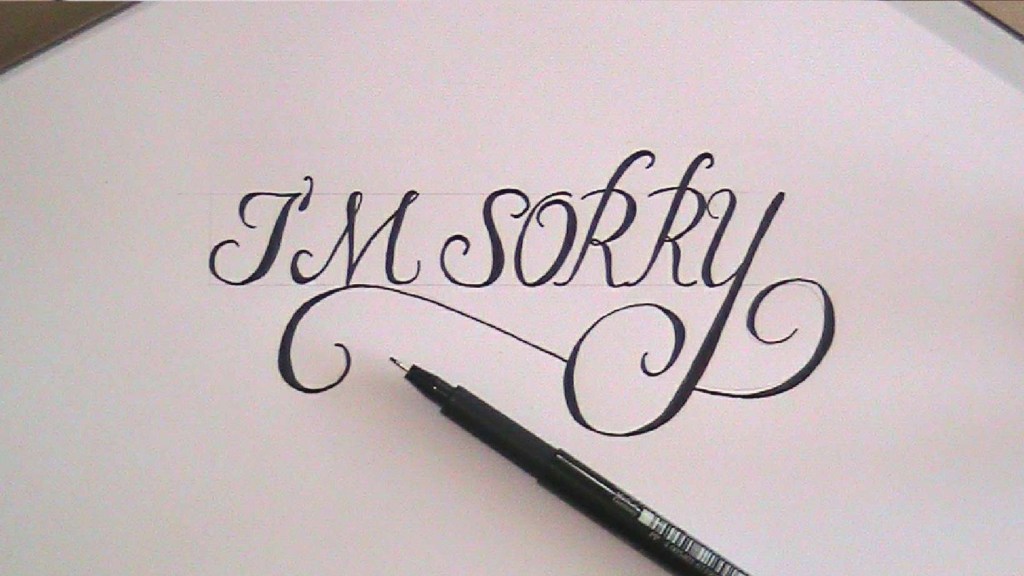
How About an Apology?

Listen to this letter of apology:

Dear Dog,
I am so sorry about you being sent to the dog pound for the broken lamp which you did not break; the fish you did not spill; and the carpet that you did not wet; or the wall that you did not dirty with red paint…
   Things here at the house are calmer now, and just to show you that I have no hard feelings towards you, I am sending you a picture, so you will always remember me.

Best regards, The Cat”

The Old French root of the word “repent” is “repentir,” which actually means to be sorry. The cat may have said he was sorry, but there is no sorrow here. 

It reminds of me of the story of a woman with fourteen children, ages one through fourteen, who decided to sue her husband for divorce on grounds of desertion. “When did he desert you?” the judge asked. “Thirteen years ago,” she replied. “He left 13 years ago? Where did all the children come from?” The woman looked sheepish. “He kept coming back to say he was sorry.”

Again, no sorrow here, for if he’d been truly sorry, he’d have stayed. Sincere repentance always leads to change.

We need to learn how to make a GOOD APOLOGY — one that is sincere and honest. One that gets the job done. Offering a good apology is not something many people do well. But we can learn. 

It is well said that a good apology has three parts: I am sorry; it is my fault; what can I do to make it right?

I am sorry. Three short words that, when they are heart-felt, can be most difficult to say. But when uttered, they can change lives.

It is my fault. No excuses. No blame. Psychologist Carl Jung insightfully said, “The only person I cannot help is one who blames others.” When we accept fault we have the power to do something about it. When we pass the blame, we are helpless to keep it from happening again.

What can I do to make it right? Unless we change something, nothing changes. A good apology is followed by action. Otherwise, it is only words. 

If you are going to apologize, apologize well. Never ruin your apology with an excuse and back it up with action. 

Learning how to make a good apology is too important to neglect. It’s part of maintaining whole and healthy relationships. And it’s something we can practice today.

And so, we Pray: Lord, I do need to make some apologies for things that have happened with relationships. Help me to make them sincere, real and heart-felt. Amen.

Grace and Peace
Steve

Give Me Hope and Courage

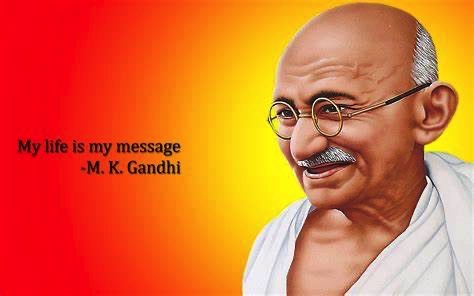
Many years ago I found a short story about Mahatma Gandhi that I have gone back to several times. It has given me hope and courage. Even if you are not one to pray, I think you will discover that it is useful.

We remember Gandhi as a leader in India’s struggle for independence. It is hardly an exaggeration to say that he brought the British Empire to its knees without firing a shot. He was a small man of great courage. His non-violent resistance was fraught with danger and the cause eventually claimed his life.

Gandhi once spoke about the source of his courage. He related a story about an incident that occurred in South Africa. There was a law directed expressly against Indians in South Africa that he had gone there to oppose. His ship was met by a hostile mob that had come with the announced intention of lynching him. Gandhi was advised to stay on board for his own physical safety. But he went ashore nevertheless.

When later asked why he made such a dangerous decision, he explained, “I was stoned and kicked and beaten a good deal; but I had not prayed for safety, but for the courage to face the mob, and that courage came and did not fail me.”

I believe he went after the right thing.

Like you, I know what it is to be afraid. I’m afraid of accidental injury, dismemberment or death. I’ve been afraid of a pending medical diagnosis. There must be a million different faces to the fears of life. Like this morning I am having a colonoscopy. Boy, I look forward to this… especially since they have found polyps several times before. I don’t like the prep, the procedure, the trying to wake up, or what the outcome may be.

I’m tempted at these times to hope for, and pray for, a way to avoid the danger ahead. I want to be safe, secure and healthy. But none of us is always safe, secure or healthy. So, like Gandhi, I think the best prayer is for courage to face whatever life may bring. And I am convinced that the courage will come and not fail me.

And so, we pray: Lord, we all are facing something we don’t see coming or are afraid may be in the cards for us. I pray for us all to have the courage to face whatever life brings us… for courage will never fail us. You, O Lord, are in the courage. Amen.

Grace and Peace
Steve

PS. Today’s Colonoscopy was canceled until I have another echo. May happen after the first of the year

Dancing in the Rain

 “The pharmacist just insulted me,” a woman sobbed to her irate husband. He snatched the phone from her hand.

“I’m sorry to upset her,” the pharmacist said, “but put yourself in my shoes. First, my alarm didn’t go off and I overslept. I rushed out and locked both my house and car keys inside and had to break a window to get them. On the way to the pharmacy I got a speeding ticket. When I finally arrived late, there was a long line and the phone was ringing. I bent over to pick up a roll of nickels, I cracked my head on a drawer and fell backward, shattering the perfume case. Meanwhile, the phone was still ringing. I picked up and your wife asked me how to use a rectal thermometer. I swear, all I did was tell her.” 

Have you ever had a day like that? One man likes to say, “My life is filled with mountaintop experiences. One day, I’m on top of the mountain. The next day the mountain is on top of me.” Those kinds of mountaintop experiences are hard to take.

There will always be times when the mountain is on top. Or, in the words of Charles Tindley, times “when the storms of life are raging.” When that is the case, what do you do? One wise sage gives us a clue: 

“Life is not about waiting for the storm to pass. It’s about learning to dance in the rain.” 

I wager we all have spent too much time just waiting for one kind of storm or another to pass. “When things change…” “When everything settles down…” “When it gets easier…” “When…” Well, you get the idea.

A few years ago, someone stole a friend of my wife’s purse. That was a storm they didn’t see coming. For days she was hassled with replacing lost credit cards and identification. And though it wasn’t a crisis, it was still an aggravation.

As she went about the process of trying to protect her identity from theft and replacing the contents of her purse, I recalled the words of author Matthew Henry, an 18th Century English clergyman. Henry, too, was robbed. Yet he approached his problem differently than I. Unbelievably, his predominant feeling was not anger, but gratitude. What he said was, “I give thanks that I have never been robbed before; that although he took my wallet, he did not take my life; that although he took everything, it was not much; and finally, that it was I who was robbed and not I who robbed.”

No self pity there. He was robbed and came away feeling gratitude for his life. Here was a man who learned something I had not yet figured out – to dance in the rain. 

I’ve found that, over the years, there is plenty of rain, and much of my life and yours has been about waiting for the storms of life to pass. So next time it rains, we need to start dancing. 

And so, we pray: Lord, you know all too well that there have been many storms in my life… most of which did not cause me to dance… but to start my own pity party. Help me to use those times like my mother taught me… use your illness… your downtimes as an opportunity to help someone else. Amen.

Grace and Peace
Steve

Write That Letter

When William Stidger taught at Boston University, he once reflected upon the great number of un-thanked people in his life. Those who had helped nurture him, inspire him or who cared enough about him to leave a lasting impression.

One was a schoolteacher he’d not heard of in many years. But he remembered that she had gone out of her way to put a love of verse in him, and Will had loved poetry all his life. He wrote a letter of thanks to her. 

The reply he received, written in the feeble scrawl of the aged, began, “My dear Willie.” He was delighted. Now over 50, bald and a professor, he didn’t think there was a person left in the world who would call him “Willie.” Here is that letter:

“My dear Willie, 
I cannot tell you how much your note meant to me. I am in my eighties, living alone in a small room, cooking my own meals, lonely and, like the last leaf of autumn, lingering behind. You will be interested to know that I taught school for 50 years and yours is the first note of appreciation I ever received. It came on a blue-cold morning and it cheered me as nothing has in many years.” 

Not prone to cry easily, Bill wept over that note. She was one of the great un-thanked people from Bill’s past. You know them. We all do. The teacher who made a difference. That coach we’ll never forget. The music instructor or Sunday school worker who helped us to believe in ourselves. That scout leader who cared. 

We all remember people who shaped our lives in various ways. People whose influence changed us. Bill Stidger found a way to show his appreciation – he wrote them letters. 

Who are some of the un-thanked people from your past? It may not be too late to say, “Thanks.”

And so, we pray: Lord, I have had so many people lift me up, propel me onward, inspire me to be more than I ever thought I could be. Help me to thank all those people who made a difference in my life. Amen.

Grace and Peace
Steve