The Best Teachers

Did you know that ninety percent of the world’s ice covers Antarctica? This ice also represents most of the fresh water in the world. Yet Antarctica is the driest place on the planet, with an absolute humidity lower than the Gobi desert.

If you’re into biology, you may know this about the Mayfly — after hatching, it takes up to three years to grow up, and then spends only one day as an adult. During that day it mates, lays eggs and expires. That last day must be absolutely spectacular.

Next time you dust your house, you may be interested to know that most of the dust particles you are removing are actually tiny bits of dead skin. Don’t even ask how much dead skin has made its way into your favorite pillow.

Did you know that the Mona Lisa has no eyebrows?

Or that that 80% of your brain is water? Well, mine anyway.

You’ve heard the expression “having a lark.” Those who are interested in language might want to know that group of larks is called an exaltation. A group of owls is called a parliament. A group of crows is called a murder. A group of rhinos is called a crash, which seems to make some sense. But here’s the best of all: a group of Unicorns is called a blessing.

As interesting as all of these facts are, I doubt any of them is bound to significantly change your life. The stuff we need to know in order to live happier, healthier and more meaningful lives does not usually come from tidbits of knowledge. More often it comes from people; and especially, people who mean something to us. Let me explain.

For Ross Perot, the kind of knowledge that made the greatest difference in his life was actually gleaned from his mother. The American businessman and one-time presidential candidate made billions of dollars from the technology industry. But his mother, who raised him before the phrase “computer age” was ever coined, taught him how to live. She taught him one of the greatest lessons of all: she taught him about compassion for the less fortunate.

Perot remembers the days of America’s Great Depression. “Hoboes” regularly knocked on their door asking for a little food. It puzzled young Ross that his house seemed to be singled out on their street. One day he learned why. On the curb in front of their house someone had etched a white mark, indicating to fellow travelers that this house was an “easy mark.” This fact disturbed the boy and he asked his mother if she wanted him to erase the signal. She told him to leave it there. It was a lesson in compassion he never forgot.

Some of the most essential life lessons and wisdom young Ross acquired did not come from a book or a classroom. They were lessons that came from those people closest to him. Many concerned themselves with the heart and spirit. They taught him about the world and the best way to live in it.

Our greatest teachers are usually those who did not volunteer for the job. They are parents and friends, spouses and children. Much great wisdom is learned best from the example of those closest to us.

And the remarkable fact is this: you are a great teacher. You teach powerful lessons every day of your life. You teach them simply by the way you live; by the way you respond to the world; and, by the little decisions you make. I wonder — who’s watching and learning?

And so, we pray: Lord, help me to be a better teacher that others may be empowered and uplifted by the way I live my life each day. Amen.

Grace and Peace
Steve

There is a Hole in The World

Do you remember the Eagle’s song “Hole in the World”? It begins like this:

There’s a hole in the world tonight.
There’s a cloud of fear and sorrow.
There’s a hole in the world tonight.
Don’t let there be a hole in the world tomorrow.

[Music and lyrics by Don Henley and Glenn Frey]

I am an optimist and constantly look for the best. But it does seem, at least at times, that there is a hole in the world.

We live in a day of almost unrestrained violence. Children can be snatched from homes and slain at school. Bombs and missiles are exploded in public places. There is war and there are rumors of war. No community, no race, no nation is immune to nor protected from a growing culture of violence. It’s as if there is a hole in the world. Now, more than ever, we need to learn a different way, for the path we’re following leads to a dark and dangerous wilderness.

I like the way of Azim Khamisa and Ples Felix, two men who experienced first hand a cloud of fear and sorrow. One deadly evening in 1995, 14-year-old Tony Hicks shot and killed a 20-year-old college student and pizza deliveryman in San Diego, California. Tony and several other gang members ordered pizza and, when it was delivered, Tony was told by his gang to shoot the young man who delivered the food, Tariq Khamisa.

Tariq’s father Azim was enraged at the senseless killing. “There’s something really wrong with a society where kids kill kids,” he spat. He was angry with the kids, but he was even more upset with a culture that breeds so much violence.

Shortly after his son’s death, Azim heard from a gentleman named Ples Felix. Ples was Tony Hick’s grandfather and guardian. Azim invited Ples to his home and the two men shared their mutual grief and heartache. But it didn’t stop there — they also decided to do something. “I realized that change had to start with me,” Azim reasoned. Therefore, though he may have wanted revenge, the grieving father chose a different way to respond to his son’s death.

What happened? The victim’s father toured the United States with the killer’s grandfather. The two men visited schools with a message of nonviolence. They told the story of Tariq and Tony — one child dead and the other in prison. And in a growing worldwide culture of violence, these two men of peace changed lives. They warmed hearts and stimulated minds of countless young people. They showed us all there is a different way to live. 

David Orr, college professor and author, talks about this different way of living. “The plain fact is that the planet does not need more successful people,” he says. “But it does desperately need more peacemakers, healers, restorers, storytellers, and lovers of every kind. It needs people who live well in their places.” 

I like that…the world needs “people who live well in their places.” People like Azim Khamisa and Ples Felix. 

I want to be one of those people. So I will choose a different way. I will choose to be a peacemaker, a healer and a life-bringer. To the best of my ability, I will try to live well in my place. 

Because I believe there does not have to be a hole in the world tomorrow.

And so, we pray: Lord, help us to be a part making the hole in the world much smaller – forgive and speak the words of peace. Amen.

Grace and Peace
Steve

How Much Music Can You Make?

Imagine this. A concert violinist is performing a difficult piece in front of a large audience. Suddenly there is a loud snap that reverberates throughout the auditorium. The audience immediately knows that a string has broken and fully expects the concert to be suspended until another string, or instrument, is brought to the musician.

But instead, the violinist composes herself, closes her eyes and then signals the conductor to begin again. The orchestra resumes where it had left off and now the musician plays the music on the remaining three strings. In her mind she works out new fingering to compensate. A work that few people can play well on a perfect instrument, the violinist with the broken string plays magnificently.

When she finishes, an awesome silence hangs in the room. And then as one, the crowd rises to their feet amidst enthusiastic applause and cheers. The violinist smiles and wipes perspiration from her brow. When silence returns to the great room, she explains why she continued to play in spite of the accident. “You know,” she says, still breathless, “sometimes it is the artist’s task to find out how much music you can still make with what you have left.” 

(Though this incident is sometimes purported to have happened to the famous violinist Itzhak Perlman, it cannot be substantiated and is more likely grist in the mill of urban legend. But there is a powerful truth in this story nevertheless.)

We know what the violinist means, don’t we? We know about experiencing losses and setbacks. We know what it means to find out how much music we can still make with what we have left.

Maybe you’ve lived most of your life and you have only a little time remaining. Though most of your life is behind, can you still make music?

Maybe disease or an accident has robbed you of your capacity to work. Though too sick or weak to hold down a job, are there other ways to contribute? Can you still make music?

Perhaps a financial loss has left you impoverished. Without the resources you’ve enjoyed in the past, can you count up the numerous other resources still available to you? Time? Energy? Skills? Knowledge? Can you still make music?

Or maybe a meaningful relationship has ended and you feel alone in the world. Will you figure out what that loss means in your life, grieve its passing and decide you still have a future? Can you still make music?

There are times when we all experience loss; times when something occurs that changes everything. Like the violinist, will you find the courage to discover just how much music you can still make with what you have left? How much good you can still do? How much joy you can still share? 

I’m convinced that the world, more than ever, needs the music only you can make. And if it takes extra courage to keep playing in spite of your loss, many will applaud the effort. And who knows? Others may be inspired to pick up their broken instruments, their broken lives, and begin again.

The all-important question we each must ask is this: Just how much music can I make with what I have left?

And so, we pray: Lord, I sometimes forget that I can still play music, and make excuses for not playing. Help me to find the music… and play the music I can play with what I have left. Amen.

Grace and Peace
Steve

You Are a Work of Art

Edward Fischer writes in Notre Dame Magazine (February, 1983), that a leper in Fiji (or, more correctly, a sufferer of Hansen’s Disease) followed the leading of his twisted hands. He became an internationally known artist. “My sickness I see as a gift of God leading me to my life’s work,” he said. “If it had not been for my sickness, none of these things would have happened.”

As a young girl, Jessamyn West had tuberculosis. She was so sick that she was sent away to die. During that time she developed her skill as a writer and authored numerous novels in her lifetime.

That great author Flannery O’Connor suffered various ailments – lupus struck her at 25 and she walked only with the aid of crutches for the final fourteen years of her life. She noted, however, that this illness narrowed her activities in such a way that she had time for the real work of her life, which was writing.

Some people succeed in spite of handicaps. Others succeed because of them. I am not telling you anything new when I say that our problems help to make us what we are. Those who suffer often learn the value of compassion. Those who struggle often learn perseverance. And those who fall down often teach others how to rise again. Our troubles can shape us in ways a carefree existence cannot.

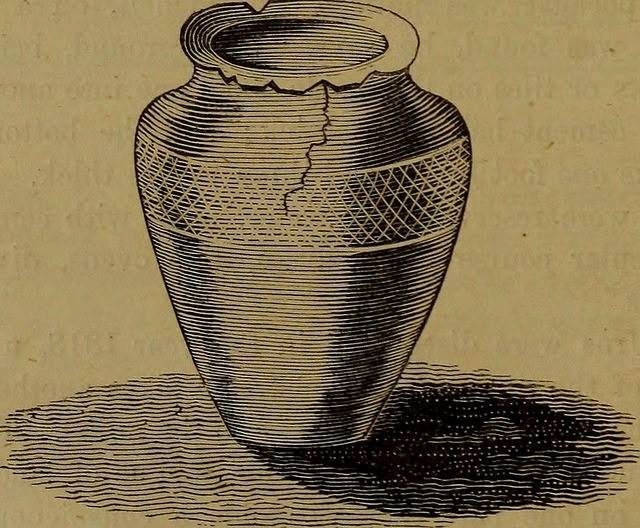
A story is told of an Eastern village that, through the centuries, was known for its exquisite pottery. Especially striking were its urns; high as tables, wide as chairs, they were admired throughout the country for their strong form and delicate beauty.

Legend has it that when each urn was apparently finished, there was one final step. The artist broke it – and then put it back together with gold filigree. An ordinary urn was thus transformed into a priceless work of art. What seemed finished wasn’t, until it was broken.

So it is with people. Broken by hardships, disappointments and tragedy, they can become discouraged and cynical. But lives can also be mended. Put back together well, they won’t be just like they were before. Damaged pieces reassembled with a golden bonding of patience and love will help form a person into an exquisite masterpiece. It is as if people have to be broken before they can become whole and complete.

If you feel broken remember this – you are a work of art. As a work of art, you may never be finished, but that is the process of a lifetime. And your very brokenness serves a purpose.

Remember this, too: Every time you decide to mend, you become a little more complete. And a little more beautiful.

And so, we pray: Lord, use my brokenness to help me be a more beautiful work of art for you and your work. Amen.

Grace and Peace
Steve

Stoop and Drink

There are some things I think I do pretty well. There are others that need improvement and still others that are probably beyond anything I can help. I tried playing golf for a few years. How hard could it be, I wondered? I soon learned. It didn’t take long before I was consistently shooting in the lower seventies. If it was any colder, I didn’t play. I liked to play, just wasn’t all that good.

I gave up playing golf after my heart attack and by-pass surgery. But this is okay – I gave me more time for doing things less frustrating, like solving the problem of world peace. 

I heard of a hotel that has a water fountain in the lobby that is operated by an infra-red beam of light. When a thirsty person wants a drink, she simply bends down and the water automatically turns on. There is a sign above the water cooler that reads, “Stoop and drink.”

What an interesting metaphor for a life attitude. Stoop and drink. Especially when we have something to learn, when we want to drink from the fountain of knowledge, we may need to stoop and drink. 

Like Albert Einstein. He once arrived in London carrying his violin case. After greeting him, an old friend asked, “You still play the violin, Albert?” The mathematical genius nodded and said, “Yes, but not very well. My teacher says, ‘The trouble with you, Mr. Einstein, is that you can’t count.’”

He knew that he had much to learn if he were to play the violin well. And he was wise enough to know that he would learn better if could approach it with a sense of humility; he had to stoop in order to drink. 

Have you ever skied? Even if you’re an adult, if you’ve never attempted downhill skiing you would do well to begin by taking a lesson on the beginner’s slope. Yes, you may be the only person in the group over four feet tall, and  you may also be the only one to slide down the slope backward while little people are whizzing by. Believe me, I know. But you’ll never get the hang of it unless you learn the fundamentals. If you stoop to take a lesson or two, you can leave the bunny slope behind forever. 

Author Barbara Sher says something interesting about this approach to learning new things. She says that you “can learn new things at any time in your life if you’re willing to be a beginner. If you actually learn to like being a beginner, the whole world opens up to you.” 

I think she’s right. It takes some stooping to approach something new like a beginner. But that is the way we learn best — at any age.

Over the years I’ve come to realize that anybody can teach me, if I let them. Young people and old people, the uneducated and the learned — anyone can be a teacher. But not anyone can be a learner. It takes the right kind of attitude to learn. But if I’m able to stoop, I’ll have plenty to drink. 

And so, we pray: Lord, I have learned that the eye of a needle is about a small gate – a low gate which we have to stoop to enter. I have to stoop to be taught. Help me to never stop learning from all people who are ready to teach me whatever I need to learn. Amen.

Grace and Peace
Steve

A Simple Old-Fashioned Faith

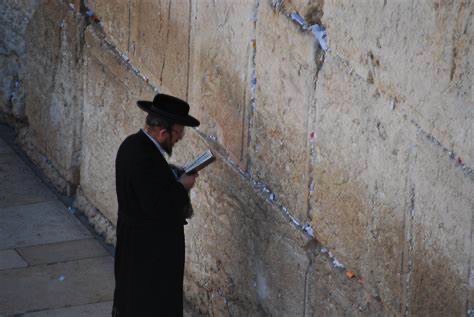
The “Wailing Wall,” believed to be a remnant of the great Temple in Jerusalem destroyed by the Romans in 70 A.D., is where the Jewish people go to recall their traditions and to pray … 

A CBS news team was taping at Jerusalem’s Wailing Wall. Every day they saw the same older man praying, morning, noon, and night. On their last day, one of the reporters asks him, “What is it you pray for so fervently?” The old man thinks for a moment and says, “I pray for health, for happiness, and peace in my land.” “I see,” says the reporter. “You don’t look very healthy. Are you happy?” “Not really,” says the man. “And your homeland is in turmoil,” the reporter says. “Do you believe your prayers are heard?” The man nods and says, “Sometimes it’s like talking to a wall.” 

Plagues, earthquakes, wars, famines, hatreds, persecutions, killings — we live right amid it all on our planet earth. And, like Job, we want to know “Why?” And there are times when it seems like we’re talking to a wall. Like Job, we need to become good listeners. Like Job, our “Why?” of rebellion needs to become the “Why?” of wisdom. Like Job, we need to understand that even though we still don’t have the answer to the “Why?” of suffering, nevertheless a caring God is in charge and, somehow, it works for good. Like Job, we need to listen and learn that apart from trust in a loving God, life is absurd. 

“Your endurance will win you your lives,” says the Lord. With patient endurance, hold onto a simple, old-fashioned faith in God and His loving kindness, and you will become a force in your relationships. There are persons all around you who need your gifts. 

With patient endurance, hold onto a simple old-fashioned faith in God and His loving kindness, and you will be empowered to give of the gentleness of your heart. 

This week, despite the bad news you will read or hear remember always: God is still God. He is acting in history. He will not abandon us. When the going gets rough, we must hang in there, and let the love we bring into the situation be a clear and convincing sign of the God of Love. As Christians, when we do this, we will set a shining example of the people God intends us to be. And that I pray, exemplifies “the people we are.” 

And so, we pray: Lord, Sometimes my prayers do seem like I am talking to a wall… from the temple or just and old rock. Help me to know that you are with me in and through all circumstances and situations, and you know what I need even before I offer my uninformed prayer. Amen.

Grace and Peace
Steve

Are We Listening?

Jesus reminds His disciples of the difficulties they will encounter along the bumpy road of life. He speaks of “wars and tumults,” of “nation rising against nation,” of “great earthquakes,” of “famines and pestilences,” of “terrors,” of “betrayals and persecutions.” In Jesus’ own words… 

“Not a hair of your head will perish. By your endurance, you will gain your lives” (Lk. 21:18-19). 

The beautiful Good News of the Gospel is that while God loves us in an infinite number of ways, He never loves us more clearly, more beautifully, than when we’re hurting. We can’t explain it, but it’s part of the Gospel — part of the Good News. 

In Albert Camus’ novel, “The Fall,” there is a devastating scene in which a respected lawyer, walking in the streets of Amsterdam, hears a cry in the night. He realizes a woman has fallen or been pushed into the canal and is crying for help. Then the thoughts come rushing through his mind: “Of course I must help, but a respected lawyer getting involved in this way? What would the implications be? And what about personal danger? After all, who knows what has been going on over there.” By the time he has thought it through, it is too late. He moves on, making all kinds of excuses to justify his failure to act. But, Camus, in one devastating line, says, “He did not answer the cry for help because that is the man he was.” 

As Christians, we are not listening to Jesus if we cannot answer another’s cry for help. We are not listening to Jesus if we are worried about the implications of getting involved. We are not listening to Jesus if our first impulse is to say, how will this affect me, rather than how can I help you? And if we are not listening, won’t that speak volumes about the people we are?” 

And so, we pray: Lord, I need your help always to not think about me but to think more about my neighbor… anyone in need. Help me not think about myself but think more about those I could… and should help. In Your name. Amen.

Grace and Peace
Steve

No One Has Arrived

“Dear Abby,” wrote a woman asking advice, “I’m forty-four years old and would like to meet a man my age with no bad habits.” To which Abby replied, “So would I!” 

Of course, neither Dear Abby nor the woman who sought her advice will ever meet a man with “no bad habits.” Mr. or Mrs. Perfect simply does not exist. We’re all flawed human beings — no exceptions. In Biblical language, we’re all sinners. 

As the story goes, two old childhood friends meet at a reunion. “Why is it that you never got married?” one friend asks the other. “To tell you the truth,” the man replies, “I spent my entire youth looking for the perfect woman. 

“In my 20s, I met a beautiful and intelligent woman, but she was unkind. In my 30s, I met a very kind woman, but we had no common interests. And over the years, I met one woman after another who seemed just right — but there was always something missing. Then just recently I met her! She was intelligent. She was generous. She was kind. We had everything in common. In fact, she was perfect.” The other man was puzzled. “What happened? Why didn’t you marry her?” he asks. “Sad to say,” the other replies, “it seems she was looking for the perfect man!” 

“Be perfect, even as your Heavenly Father is perfect,” Jesus said in the Sermon on the Mount. That’s our goal. That’s our ultimate destiny. That’s what we’re moving toward and growing into when we follow Jesus’ direction. We’re in the process of realizing our full human potential. But none of us has arrived yet. No one is blameless — not your best friend, nor your worst enemy — and most assuredly, not me. 

We are all called to grow in the grace of Christ everyday. Some moments we will feel we are doing great, and the very next moment we feel that we have fallen from grace. There are many ups and down in our journey of growing in grace… but keep at it knowing that the love of God surrounds us every moment of every day. We know that we are growing in grace when wee realize that we love God more and love our neighbor without judging or consequence

Here and now, if the question of who you are and what we ought to be doing with our life has you “up a tree,” so to speak, pray to Jesus and then listen to hear Him whisper tenderly, “Salvation has come to this child of God!” 

And so, we pray: Lord, boy do I know I have not arrived… not even close. But I do realize most moments that Your Grace and Love covers me and my every move. Thank you for walking with me and loving me… yes, even me. Amen.

Grace and Peace
Steve

Hold My Hand

The great philosopher, “Charlie Brown,” once made a profound observation that touches on what we call “salvation”… 

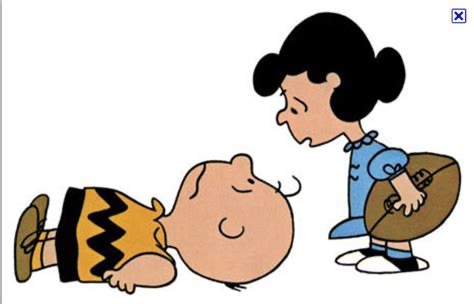
Charlie is leaning against a tree, talking to Lucy. She asks, “What do you think security is, Charlie Brown?” Charlie answers, “Security is sleeping in the back seat of a car when you’re a little kid, and you’ve been somewhere with your Mom and Dad, and it’s night. You don’t have to worry about anything. Your Mom and Dad are in the front seat, and they’re doing all the worrying. They take care of everything.” 

Lucy smiles and says, “That’s really neat.” Charlie Brown, who never seems to know when to stop, gets a serious look on his face and says, “But it doesn’t last. Suddenly you’re grown up, and it can never be that way again. Suddenly, it’s all over, and you’ll never get to sleep in the back seat again. Never!” Lucy gets a frightened look on her face and asks, “Never?” And Charlie Brown replies, “Never!” 

As they stand there, sensing the terrible loneliness that goes with being an adult, Lucy reaches out and says, “Hold my hand,” Charlie Brown. 

Let us reach out and say to one another, “Hold my hand.” And, in holding one another’s hands — in placing ourselves in one another’s service — we will experience the Presence of Christ’s hand in ours. We will be secure in the knowledge that salvation has come to our house in the form of the Love of Almighty God. And the loneliness will pass away. And the insecurity will pass away. And, no longer will we feel like we’re “up a tree.” 

And so, we pray: Lord, I do feel alone at times… as a child… as an adult… as an older adult. And I need to know that you are holding my hand… and have been holding it all my life. Embrace me in your grace so that I may know the security of your love. Amen

Grace and Peace
Steve

Love Will Find a Way

“There will be a new tomorrow. There will be a brighter day. There will be a new tomorrow. Love will find a way.”

These lines are from a popular song of the 60s. This concern for tomorrow is also expressed in a Broadway Play of the time. In it, a young man drops out of school and is estranged from his parents as he struggles with addiction. Out of the depths of what he sees as a hopeless situation, he cries out, “How I wish life were like a notebook so you could tear out the part where you’ve made all the mistakes and start over with a page that is fresh and clean.” 

Today, young people the world over are beginning to express real concern for this new tomorrow, this new chance, this new opportunity. From the plague of gun violence to the existential threat of global warming, the ever-growing awareness and activism of today’s youth should provide a ray of hope for the rest of us. Indeed, for all of us, there comes a time when we long for a new start, a new page, a new opportunity, a new tomorrow. The question is: Will Love find a way? 

One of the fantastic things about the Gospel of Jesus Christ is that God’s Love does find a way. Nothing we have done in life prevents God from giving us a new tomorrow. No mistake, no wrong decision, no wrongful act of any kind can defeat God’s Will to forgive. Nothing we do can bind us irrevocably to the past because God is always here to show us the way to a new life in a new tomorrow — sometimes in the most surprising and wondrous ways. 

So the beginning of that new tomorrow is to know that our tomorrow is in God’s hands… however it may work out. I have often thought the world is going to hell in a hand basket…but God says this is a new day. And the Gospels all tell us that The love of Christ will find a way. Hold on to that promise no matter what you are thinking or facing. Love will, indeed, find a way.

And so, we pray: Lord, I admit that I often wonder about today and tomorrow… how will it be? Will it be? Help me to realize that the cross of Christ Jesus is the promise… “Today you will be with me in paradise.” Amen.

Grace and Peace
Steve